

What Changed in the Make in India Domestic Value Addition Rules
On Friday, 20 November 2026, the Ministry of Electronics and Information Technology, known as MeitY, revised the way domestic value addition is measured for six categories of IT hardware bought by the government. The change rewrites a notification the ministry issued on 7 September 2020 and resets the test that decides how much of a computer, laptop, server or display genuinely counts as made in India. For manufacturers that sell to government departments, schools, public sector offices and state-run institutions, the revision changes which products qualify for preference in public procurement and how much credit they earn for work done inside the country.
The announcement came in an official release from the Press Information Bureau. It covers desktop PCs and all-in-one PCs, laptop PCs, thin clients, servers, computer monitors and interactive flat panel displays, the large touchscreens now common in classrooms and meeting rooms. The ministry said the revision was made with a view to promoting domestic manufacturing, strengthening indigenous capabilities and generating employment. The new method will come into effect six months from the date of its publication in the Official Gazette, and it will supersede the corresponding provisions of the September 2020 notification for these six products.
The heart of the change is a shift from a component-wise calculation to a process-oriented one. Under the revised framework, domestic value addition, or DVA, is worked out through a Bill of Materials based mechanism that recognises eligible manufacturing activities and processes actually carried out in India. The ministry has also given fresh weight to research and development done in India, to Indian product design and to Indian-owned intellectual property. A standardised format for calculating DVA and for self-certification by manufacturers has been introduced, so that the value a company claims can be checked objectively wherever required.
What the ministry has not done is change the headline idea behind the policy. The Public Procurement (Preference to Make in India) Order of 2017 still stands as the framework, and the revision changes how local content is counted rather than rewriting the preference itself. That distinction matters, because the practical effect of the new rules will be felt in tender rooms and factory planning meetings rather than in a single headline number. A product that scored well under the old arithmetic may score differently now, and a manufacturer that assembles imported kits in India may find that final assembly alone earns less credit than it used to.
The Six Products Covered by the New Domestic Value Addition Method
The six product categories named in the revision cover almost everything a government office, school or data centre buys when it equips itself with computing hardware. Desktop PCs and all-in-one PCs are the workhorses of government offices. Laptop PCs are issued to officials, teachers and field staff. Thin clients, the stripped-down terminals that draw their computing power from a central server, are widely used in banks, examination centres and offices where central control matters. Servers power government data centres and the digital services citizens now use every day. Computer monitors sit on every desk. Interactive flat panel displays, the large touchscreens that have replaced blackboards and whiteboards in smart classrooms and conference rooms, complete the list.
The choice of these six is not accidental. They are the categories in which government procurement is a very large buyer, and where the gap between assembling a finished product in India and actually making its parts in India has been widest. India buys laptops, desktops and servers in enormous volumes, for central ministries, state governments, schools, universities, hospitals and public sector undertakings. When the government is the customer, the rules it writes for its own purchases shape the whole market, because manufacturers design their supply chains around the chance of winning those orders.
The revision also arrives at a moment when the product list itself is evolving. Interactive flat panel displays were a niche item a decade ago and are now standard equipment in digital classrooms under government education programmes. Servers have grown in importance as government services move online and as data centres expand. By covering all six together, the ministry has applied one consistent method to the full range of hardware the state buys, rather than leaving different products under different counting rules.
For companies, the practical question is now a product-by-product one. A laptop and a server face the same framework, but the manufacturing steps that earn credit differ between them, and a firm that makes both will have to run the new calculation separately for each category. The standardised format the ministry has introduced is meant to make that exercise comparable across companies and verifiable by procurement officers who are not themselves manufacturing engineers.
How the New Bill of Materials Method Works
Domestic value addition is, at its simplest, the share of a finished product’s value that was created inside the country. It is calculated on the cost of local components as a percentage of the total cost of the final product. The old method, set out in the September 2020 notification, used a component-wise approach that listed parts and assigned them values. The new method is process-oriented and built around the Bill of Materials, the complete list of parts and materials that go into a product. Instead of asking only which components are Indian, it asks which manufacturing activities and processes were performed in India, and gives credit for each of them.
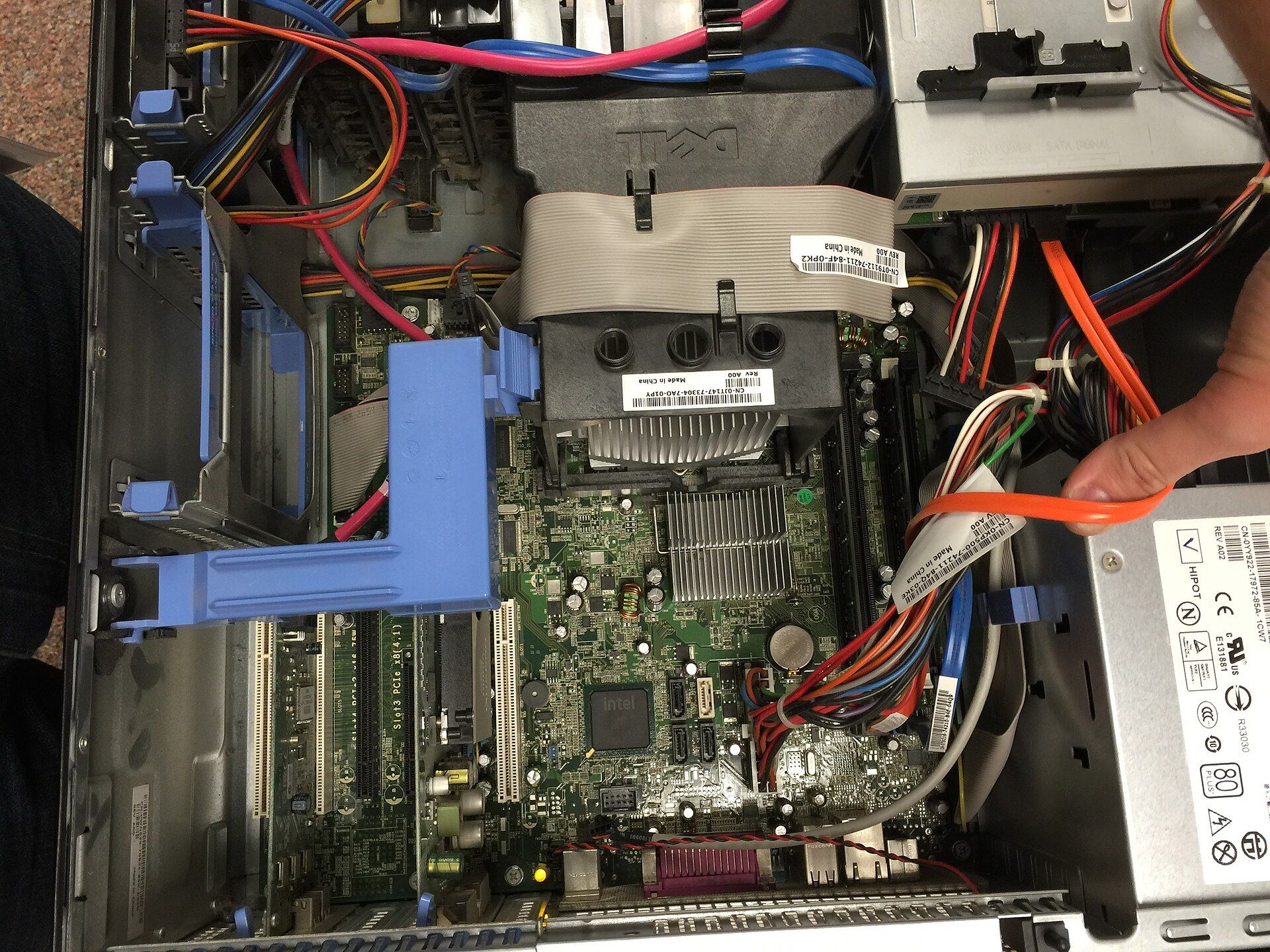
The release names the activities that will now count. They include mainboard or motherboard assembly through Surface Mount Technology, the automated process in which tiny electronic components are placed and soldered onto a circuit board. They include the domestic sourcing of bare printed circuit boards, the green boards on which those components sit. They include the assembly, testing and packaging of memory, meaning RAM, and of storage, meaning solid state drives. They include display assembly processes, the domestic sourcing of chassis and power modules, and final assembly and testing of the finished product.
Each of those steps is a real factory job. Surface Mount Technology lines are capital-intensive and employ trained technicians. Sourcing bare printed circuit boards in India means a domestic board maker gets the order instead of an overseas one. Packaging memory and storage in India means the chips may still be imported, but the work of turning them into a finished module happens here. Display assembly, chassis sourcing and power module sourcing push the same logic further down the supply chain, rewarding firms that build the metalwork, the power supply and the screen assembly in India rather than importing them as finished sub-assemblies.
The shift matters because the old way of counting could reward a product in which most of the value was imported, provided the imported parts were put together in India. The new way looks at the chain of work. A company that only screws together imported kits will earn credit for final assembly and testing, but not for the motherboard work, the board sourcing, the memory packaging or the display assembly that it did not do. A company that does those steps in India will score higher. In government tenders, where local suppliers are given preference, that difference can decide who wins the order.
The ministry has paired the new method with a standardised format for DVA calculation and self-certification. Manufacturers will declare their domestic value addition in a common format, and the framework is designed so that the declared figure can be verified objectively wherever required. That is a response to a long-standing complaint in procurement, that local content claims were hard to compare and harder to check. A common format does not by itself end disputes, but it gives procurement officers a single yardstick and gives honest manufacturers a way to prove what they have done.
Why Research, Design and Intellectual Property Now Count More
Beyond the factory floor, the revision gives new weight to work that happens before a product is ever built. The ministry said the revised methodology provides adequate weightage to eligible in-house research and development undertaken in India, to promote indigenous technology development and innovation. It also assigns additional weightage to Indian product design and to intellectual property rights in these IT hardware products, to encourage indigenous design capability and the creation of intellectual property in the sector.
This is the part of the revision that reaches furthest into the future. Manufacturing a laptop in India is one thing. Designing it in India, owning the patents and the engineering behind it, is another, and it is where the largest share of the value in electronics usually sits. A country that assembles other people’s designs captures the wages of assembly. A country that designs its own products captures the engineering salaries, the licensing income and the freedom to change the product without asking a foreign owner. By giving design and intellectual property explicit weight in the DVA calculation, the ministry is telling manufacturers that the design office matters as much as the assembly line.
The emphasis on in-house research and development points in the same direction. A company that runs its own R and D centre in India, employs Indian engineers to solve hardware problems and builds its own testing and validation capability will now see that investment reflected in its domestic value addition score. That is a deliberate incentive. Research jobs are harder to create than assembly jobs, and they are easier to lose to another country, so a procurement rule that rewards them is a way of anchoring them here.
There is a careful word in the release that should not be missed. The weightage applies to eligible in-house research and development. Not every rupee spent on research will count automatically. The detailed notification, when it is published in the Official Gazette, will set out what qualifies, and manufacturers will need to read it closely. The same applies to design and intellectual property. The announcement sets the direction, but the fine print will decide how much credit a particular design centre or patent portfolio actually earns.
The 2017 Make in India Procurement Order Behind the Rules
To understand why a change in arithmetic matters, it helps to understand the order it sits under. The Public Procurement (Preference to Make in India) Order of 2017 was issued to give preference in government purchases to goods made in India. It divides suppliers into classes based on the share of local content in their products. A Class-I local supplier, the category that receives the strongest preference, is one whose goods carry at least 50 per cent local content. A Class-II local supplier is one whose goods carry at least 20 per cent local content. Suppliers below those thresholds get no preference at all.
Local content, in this framework, is the amount of value added in India, and the DVA methodology is the ruler by which it is measured. Change the ruler and you change who qualifies as Class-I and who slips to Class-II, even if no factory has moved and no product has changed. That is why a methodology revision can be as consequential as a change in the thresholds themselves. A manufacturer that was comfortably Class-I under the 2020 method could find itself closer to the line under the new one, and a manufacturer that invested in deeper Indian manufacturing could find itself newly advantaged.
The order applies across government purchasing, from central ministries to public sector undertakings, and its logic is straightforward. Public money should, where possible, support domestic industry. The government is one of the largest buyers of IT hardware in the country, and its tenders run into thousands of crores of rupees every year. When the state writes the rules for its own shopping, it is also writing industrial policy, because the firms that want those orders will organise their factories to meet the rules.
The revision also fits a wider pattern in Indian procurement policy. Over the past decade, the government has repeatedly tightened the definition of what counts as made in India, moving from a system that rewarded final assembly toward one that rewards deeper manufacturing. The 2020 notification was one step in that direction. The November 2026 revision is the next. The direction of travel is consistent, and manufacturers that have been watching the policy will not be surprised, even if the details of the new Bill of Materials method will require them to rework their calculations.
PLI 2.0 and the Slow Start the New Rules Must Fix
The DVA revision does not stand alone. It sits alongside the Production Linked Incentive Scheme 2.0 for IT Hardware, the government’s main subsidy programme for building computer manufacturing in India. The Union Cabinet approved that scheme on 17 May 2023, and it was notified on 29 May 2023, with a budgetary outlay of 17,000 crore rupees over six years. The scheme was expected to lead to total production of about 3.35 lakh crore rupees, bring additional investment of 2,430 crore rupees in electronics manufacturing and generate 75,000 additional direct jobs. It covers laptops, tablets, all-in-one PCs, servers and ultra small form factor devices.
Twenty-seven applicants were approved under the scheme, including global names such as Dell, HP, Foxconn, Lenovo and Asus, alongside Indian contract manufacturers such as Dixon Technologies, Sahasra Electronic Solutions, Kaynes Electronics and Syrma SGS Technology. Most of the global companies chose the financial year 2024-25 as their first year of production, to give themselves time to move supply chains from China and South East Asia. The incentive is paid on incremental sales over a base year, at rates of 4 to 6 per cent, with higher rates for firms that commit to greater domestic value addition.
But the scheme has been slow to pay out. A NITI Aayog impact assessment of the production linked incentive schemes, released on 12 November 2026 with the Indian Institute of Management Ahmedabad as knowledge partner, reported that only 98 crore rupees had been disbursed under IT Hardware 2.0 by March 2026, which is 0.57 per cent of the 17,000 crore rupee outlay. The assessment covered all fourteen production linked incentive sectors and found that, across them, investment of 2,40,138 crore rupees and production of 22,66,412 crore rupees had been achieved by March 2026, so the IT hardware scheme stands out as a laggard.
The slow disbursement does not mean nothing is being made. Incentive claims are filed on incremental sales and are cleared after verification, so money follows production with a lag, and officials have said payouts are expected to rise significantly in the second half of the financial year 2026-27 as claims from the first production year are processed. Even so, the figures explain why the government is reaching for a second lever. The production linked incentive pays firms for making more. The DVA rules decide which firms get preference when the government itself buys. Used together, they push in the same direction, toward manufacturing that is deeper than final assembly.
The wider electronics story gives the policy its context. Electronics manufacturing in India has grown at a compound annual rate of 17 per cent over eight years, and production crossed 105 billion dollars, about 9 lakh crore rupees, in 2023, according to the government’s own statement at the time the IT hardware incentive was approved. Exports of mobile phones crossed 11 billion dollars that year. But computers have lagged behind phones. India still imports a large share of the laptops and tablets it uses, and the component base for them, from printed circuit boards to displays to memory packaging, remains thinner than the one that now serves mobile phone factories. The DVA revision is aimed squarely at that gap.
What Happens Next: Gazette, Six-Month Clock and What to Watch
The most important date in the new framework is one the ministry has not yet given. The revised methodology comes into effect six months from the date of its publication in the Official Gazette, and the release does not say when that publication will happen. Until the Gazette notification appears, manufacturers cannot fix the exact date on which the old method stops applying, though a publication in the coming weeks would point to the new rules biting around the middle of 2027. Companies bidding for government tenders in the meantime will need to watch for the Gazette date and plan their calculations around it.
When the detailed notification is published, it will carry the fine print that the announcement does not: the exact weightage for research and development, design and intellectual property, the definition of an eligible manufacturing activity, and the format in which DVA must be calculated and self-certified. Procurement officers and manufacturers alike will read those details closely, because they will decide how the new method works in practice. Any ambiguity in the definitions, for example over what counts as display assembly or as an eligible in-house research activity, will become the subject of queries and clarifications in the months that follow.
Manufacturers will have work to do in the six-month window. Firms that already do motherboard assembly, board sourcing and memory packaging in India will need to document those steps in the new standardised format. Firms that rely on imported sub-assemblies will need to decide whether to deepen their Indian operations, accept a lower DVA score, or focus on private customers rather than government tenders. Component suppliers, from printed circuit board makers to chassis and power module producers, may see new orders as hardware firms look for Indian sources to lift their scores.
What to watch, then, is not a single event but a sequence. First, the Gazette publication and the effective date it sets. Second, the reaction of the industry bodies and the large manufacturers, who will say whether the new weights are achievable or too demanding. Third, the first tenders run under the new method, which will show whether Indian manufacturers gain ground against importers. And fourth, whether the component ecosystem responds, with new investment in boards, displays, memory packaging and power modules, or whether the demand created by the rules outruns the domestic supply that exists to meet it.
The revision is, in the end, a bet. It bets that government buying power can pull manufacturing deeper into India, that rewarding design and research will keep engineering jobs here, and that a transparent, verifiable method will give honest manufacturers a fair advantage. The bet will be judged not by the announcement but by what happens in factories and tender rooms over the next two years, as the six-month clock runs and the first products are scored under the new rules.
Sources
USN reviewed reporting from multiple outlets for this story. Read more from Press Information Bureau, The Hindu BusinessLine and Moneycontrol.