

Moss Landing Beach Shooting Leaves Two Dead and Two Injured
Two people were killed and two others were injured in a shooting along Jetty Road in Moss Landing, California, in the early hours of Monday, November 2, 2026, according to the Monterey County Sheriff’s Office. The shooting took place in a small coastal community about 18 miles northeast of Monterey, near Moss Landing State Beach, shortly before or just after midnight, with reporting placing the incident around the midnight to 2 a.m. window. Deputies who responded found two people dead at the scene from apparent gunshot wounds. A third person arrived at a local hospital with a gunshot wound, and a fourth person was transported from the scene with non-life-threatening injuries. As of the afternoon of November 2, no suspect had been identified and no arrests had been announced. The victims had not been publicly identified, pending forensic examination and notification of next of kin, and this article does not name them. No motive has been established, and it is not known whether the victims knew each other. This article does not speculate on those questions.
Moss Landing is a small, working coastal community in Monterey County, known for its harbour, its power plant, its wildlife and its state beach, rather than for violent crime of this scale. That context matters for understanding the local reaction: a shooting that leaves two people dead and two injured is a major event in any community, but in a place of Moss Landing’s size it touches a tight network of residents, workers and visitors, and it leaves a lasting mark on a community that many people associate with quiet coastal roads and open beach. Jetty Road, where the shooting occurred, runs toward the beach and the harbour entrance, an area used by fishermen, surfers, birdwatchers and visitors to the state beach. At night, it is a comparatively isolated stretch, which may affect both what witnesses saw and how quickly help could arrive.
The sheriff’s office response began with deputies arriving at the scene and finding two people already dead. The discovery of a third injured person at a hospital, and a fourth injured person transported from the scene, suggests that the immediate aftermath involved multiple locations and multiple agencies: deputies securing the scene, paramedics treating and transporting the injured, and hospital staff receiving patients whose conditions and identities were initially unclear. In shootings of this kind, the first hours are often the most chaotic for investigators as well as for victims’ families, because information arrives in fragments — a call about gunfire, a patient arriving at an emergency department, a vehicle leaving the area — and must be pieced together before a coherent account emerges. Early reporting therefore carries a degree of uncertainty, and details may be revised as investigators confirm what happened.
That uncertainty was reflected in the sheriff’s office’s own public statements on November 2. The office said there was “no active threat to the Moss Landing community” at the time, while also saying that the possibility that a shooter could still be at large had not been ruled out. Those two statements may appear contradictory at first glance, but they describe different things. “No active threat” generally means that deputies were not aware of an ongoing shooting or an identified person actively endangering the public at that moment. Saying that a shooter at large had not been ruled out means that investigators had not yet established who fired the shots or where that person was, and therefore could not exclude the possibility that the person responsible remained unidentified. For residents, the practical message was mixed: there was no reported ongoing attack, but the investigation was open, the person responsible was unknown, and caution remained appropriate.
The sheriff’s office also described the shooting as an “isolated incident.” That characterisation, attributed to the sheriff’s office, should be understood as an assessment by investigators based on the information available at the time, not as a confirmed finding about motive or about the relationship between the people involved. An “isolated incident” in law enforcement language usually means that investigators do not believe there is a broader pattern, a series of related attacks, or a continuing threat to the wider public. It does not, by itself, explain why the shooting happened, whether the victims were targeted, or whether they knew the shooter. Those questions remained unanswered as of November 2 afternoon, and this article does not fill those gaps with speculation.
What Investigators Know About the Moss Landing Shooting
As of the afternoon of November 2, the confirmed facts were limited, and it is important to state them plainly rather than embellish them. Two people were dead at the scene from apparent gunshot wounds. Two other people were injured, one with a gunshot wound who reached a hospital, and one with non-life-threatening injuries who was transported from the scene. No suspect had been identified. No arrests had been announced. The victims had not been publicly named, pending forensic examination and notification of next of kin. The motive was unknown. Whether the victims knew each other was unknown. Those limits are not a failure of reporting; they reflect the stage of the investigation and the sheriff’s office’s decision not to release information that could compromise the investigation or cause distress to families before formal identification and notification are complete.
Forensic examination and next-of-kin notification are standard steps in a homicide investigation, but they carry particular weight in a case like this. Forensic examination helps establish the cause of death, the nature of the injuries, and potentially the type of weapon used, although investigators do not always release weapon details early in an investigation. Next-of-kin notification ensures that families learn of a death from officials, in person where possible, rather than from social media or news reports. Until those steps are complete, withholding names is both a procedural requirement and a matter of respect for families. It also prevents misidentification, which can occur when early, unverified names circulate online and are later found to be wrong.
Investigators will typically pursue several lines of inquiry in parallel after a shooting of this kind. They will examine the scene for physical evidence, including shell casings, vehicles and any other items left behind. They will seek surveillance video from nearby businesses, harbour facilities and traffic cameras, where available. They will interview witnesses, including anyone who was in the Jetty Road area overnight, and they will check hospital records and emergency call logs to establish a timeline. They may also ask the public for information, particularly from anyone who was in the area between midnight and 2 a.m. on November 2 and who saw vehicles, heard gunfire, or noticed anything unusual. None of those investigative steps, however, guarantees a quick resolution, especially if the shooting occurred in a dark, isolated area with few witnesses.
The timeline itself remains approximate. Reporting described the shooting as occurring shortly before or just after midnight, within a window extending to about 2 a.m. That imprecision is common in overnight incidents, where the exact time of gunfire may be established only later through emergency call records, surveillance timestamps or forensic evidence. For the public, the key point is not the precise minute but the location and the period: Jetty Road in Moss Landing, in the early hours of November 2, when the beach area would have been quiet and largely empty of daytime visitors.
Moss Landing State Beach and Jetty Road Closed During Investigation
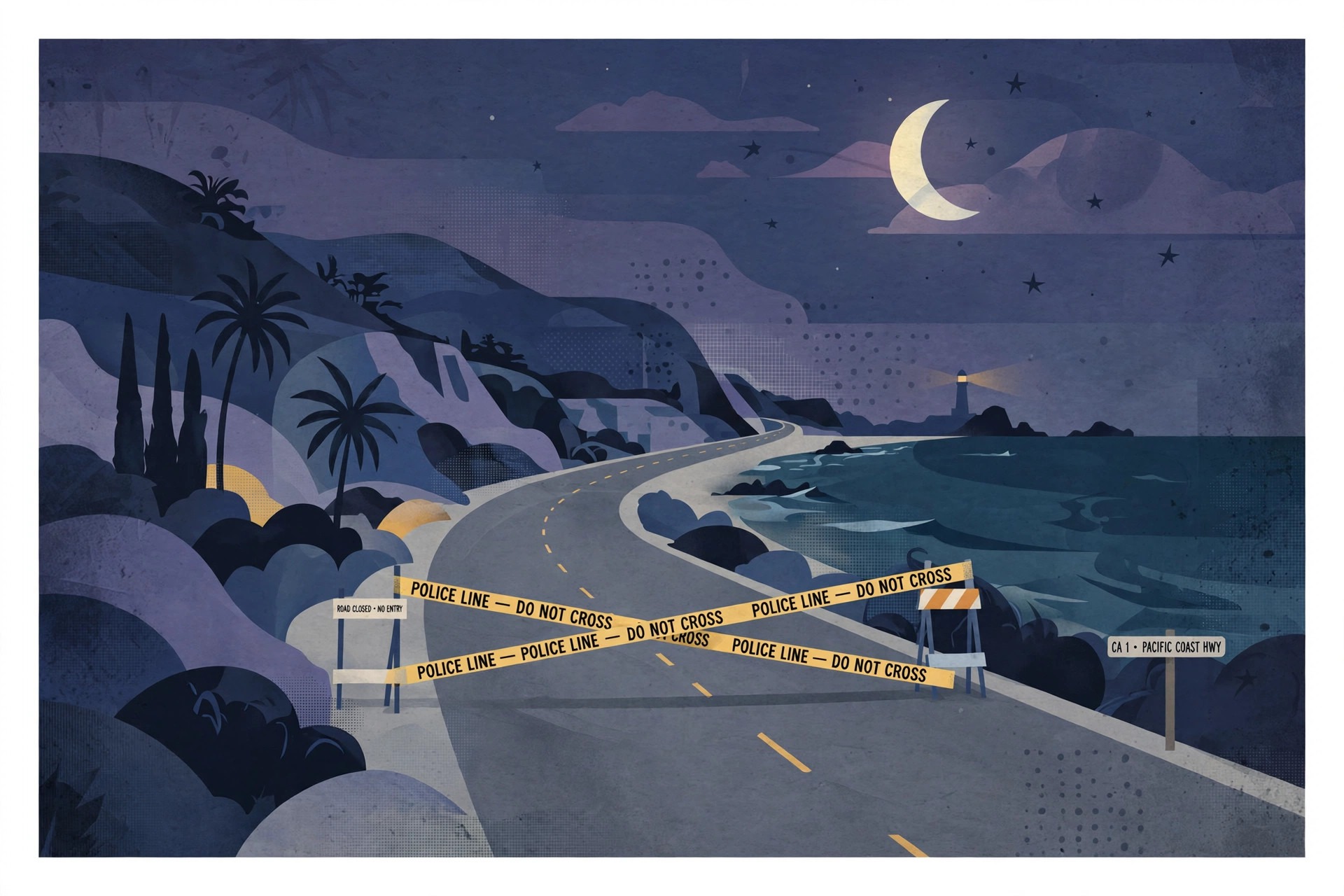
During the investigation, Moss Landing State Beach and Jetty Road were closed by California State Parks Police at the request of the sheriff’s office. Moss Landing State Beach normally closes at sunset, so the closure primarily affected daytime access on November 2 and the ability of visitors to use the beach and the road while investigators worked. Road and beach closures in a homicide investigation serve several purposes: they preserve the scene for forensic examination, they prevent contamination of evidence by vehicles and foot traffic, they allow investigators to search a wider area systematically, and they protect the public from entering an area where an investigation is ongoing. Closures of this kind are usually temporary, but their duration depends on the complexity of the scene and on whether investigators need to return for further examination.
For a community that depends on coastal access for recreation and, in part, for livelihoods, even a temporary closure is disruptive. Fishermen, harbour workers, wildlife watchers and visitors who had planned to use the beach on November 2 had to change their plans. Local businesses that serve beach visitors may also have felt the effect, although the primary concern on the day was the loss of life and the investigation itself, not the economic impact. State Parks Police, who manage the beach, worked alongside sheriff’s deputies, illustrating the multi-agency nature of the response: a county sheriff’s investigation, a state parks closure, and local emergency medical services all played roles in the hours after the shooting.
The closure also raises a practical question for residents and visitors in the days after the shooting: when will the beach and road reopen fully, and will there be any ongoing police presence? Those decisions rest with the sheriff’s office and State Parks Police, based on the progress of the investigation. Once the scene has been fully processed and there is no longer a need to restrict access, closures are typically lifted, although investigators may return if new information emerges. This article does not predict a reopening time, because none was confirmed in the reporting available at the time of writing.
A Small Community Confronts a Deadly Shooting
Moss Landing’s geography and character shape how a shooting like this is experienced locally. The community sits at the mouth of Elkhorn Slough, between Santa Cruz and Monterey, with a harbour that supports commercial fishing, research vessels and recreational boating, and a beach that draws visitors for surfing, walking and wildlife viewing. It is not a large town with a dedicated police department of its own; law enforcement is provided by the Monterey County Sheriff’s Office, which covers unincorporated areas of the county. That structure means that a major incident in Moss Landing draws deputies and investigators from across the county, and that local residents may know the deputies who respond, as well as the victims, through community ties.
In small communities, the withholding of victims’ names can feel especially difficult, because rumours travel quickly and residents may fear that someone they know is among the dead or injured. Officials balance that anxiety against the need for accurate identification and family notification, and against the risk that releasing partial information could harm the investigation. The sheriff’s office’s decision not to identify the victims on November 2 should therefore be read as a procedural step, not as secrecy for its own sake. Families, once notified, may choose to share information publicly, or they may ask for privacy, and that choice should be respected.
The shooting also arrives in a broader national context in which gun violence, including shootings that leave multiple people dead or injured, is a recurring subject of public debate. That context, however, should not be used to impose a narrative on this specific incident before the facts are known. Whether this shooting was connected to a dispute, a robbery, gang activity, or some other circumstance is unknown, and assigning it to a category without evidence would be speculation. The responsible approach, and the one taken here, is to report what investigators have confirmed, to note what remains unknown, and to avoid filling the gaps with assumptions about motive, relationships or background.
For residents of Moss Landing and the surrounding Monterey County area, the immediate questions are practical ones: Is the area safe? Is there a suspect at large? When will the beach reopen? Should witnesses come forward? On the information available as of November 2 afternoon, the sheriff’s office had said there was no active threat, while also noting that a shooter at large had not been ruled out, and no suspect had been identified. Anyone with information about the shooting, particularly anyone who was near Jetty Road between midnight and 2 a.m. on November 2, would normally be asked to contact the sheriff’s office. That appeal for information is a standard part of a homicide investigation, and it can be decisive in cases where physical evidence alone is insufficient.
As the investigation continues, further details may emerge: the identities of the victims, once families have been notified; a description of a suspect or vehicle, if investigators develop one; a clearer timeline; and, eventually, a motive, if one can be established. Until then, the confirmed story is a sombre one: two people dead, two injured, a coastal road and beach closed for investigation, and a small community waiting for answers. The loss of life is the central fact, and it should not be overshadowed by speculation about what might have happened. The investigation, and the families’ privacy, deserve time to produce a fuller account.
Sources
USN reviewed reporting from multiple outlets for this story. Read more from USA Today, KION and The Californian.