

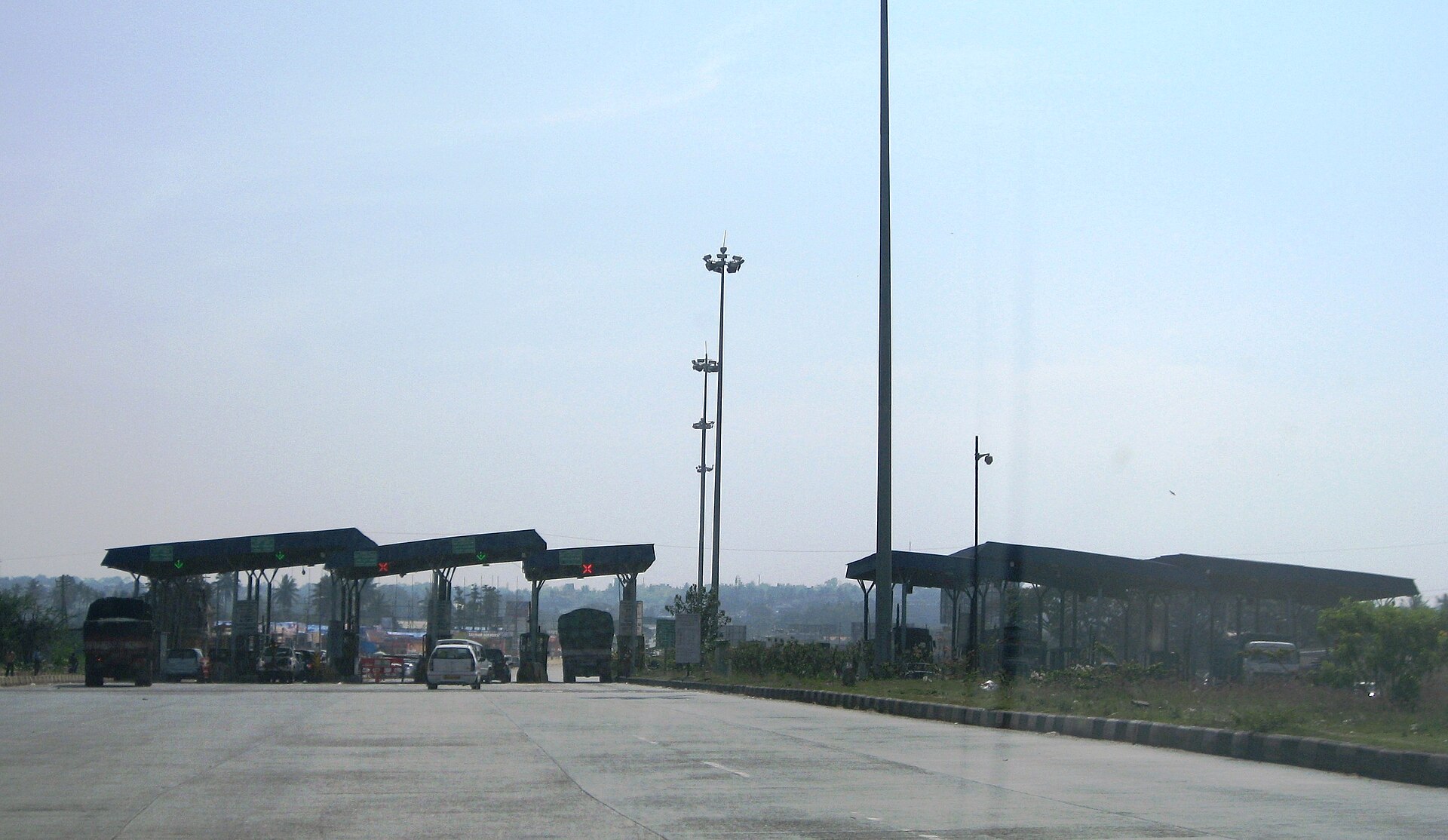
India’s busiest highways are quietly losing their most familiar bottleneck. At seven toll plazas spread across five states, drivers no longer slow down, queue up, or stop at a barrier at all. Overhead equipment reads their vehicle as it passes, the toll is deducted, and the journey continues at highway speed. Six months after the first such plaza went live, the National Highways Authority of India has published the first hard numbers on how the experiment is performing, and the figures are striking: net toll revenue across the seven plazas is up by nearly a fifth, an additional Rs 89.23 crore has flowed in, and the authority says traffic is moving faster and more cleanly at the same time.
The system is called Multi-Lane Free Flow, or MLFF, and it is the most significant change to Indian toll collection since FASTag made electronic payment the norm. The Ministry of Road Transport and Highways released the performance data on 23 November 2026, covering the seven plazas where the system had been running long enough to measure, from their individual launch dates up to 1 November 2026. The headline figure is a 19.84 per cent increase in net revenue compared with the corresponding period immediately before MLFF was switched on at each plaza. In absolute terms, the seven plazas collected around Rs 538.95 crore, against a pre-MLFF benchmark of approximately Rs 449.72 crore.
The result matters beyond the money. Toll plazas have long been among the most complained-about features of Indian highway travel, places where minutes are lost, fuel is burned in idling queues, and disputes over cash and change are routine. If barrier-less tolling can deliver smoother journeys and higher revenue at the same time, it changes the economics of the entire national highway network, and the government has made clear that the rollout will continue. This article explains what MLFF is, how the seven plazas performed, why the revenue rose, how the government is chasing drivers who try to evade payment, and what remains unknown about the road ahead.
The headline numbers behind the 19.84 per cent jump
The core of the announcement is a comparison. For each of the seven plazas, the National Highways Authority of India, known as NHAI, measured net toll revenue from the day MLFF began operating at that plaza until 1 November 2026, and set it against the revenue from the corresponding period immediately before the system was introduced. The comparison is therefore not a single fixed window: the earliest plaza, Choryasi in Gujarat, has been running since 1 May 2026, while the most recent of the seven, Paranur in Tamil Nadu, began only on 1 October 2026. Each plaza is judged against its own recent past.
On that like-for-like basis, the combined weighted increase across the seven plazas is 19.84 per cent. The simple average of the seven individual increases is slightly higher, at 21.10 per cent, because the larger plazas, which carry more traffic and more revenue, grew at rates closer to the weighted figure. The distinction matters: the weighted number is the one that reflects the actual money, while the simple average shows that the gains were broad-based rather than driven by a single location.
The money itself is substantial. Cumulative net revenue of around Rs 538.95 crore was generated by the seven plazas during their MLFF periods, compared with a benchmark of approximately Rs 449.72 crore for the equivalent pre-MLFF periods. The difference, about Rs 89.23 crore, is additional net revenue that NHAI says would not have been collected under the old arrangement. The ministry’s statement stresses that the increase came alongside a substantial rise in transaction volumes and a reduction in collection cost, which is why it describes the outcome as an improvement in both efficiency and coverage rather than simply a price effect. Toll rates were not raised as part of this change; the extra revenue comes from more vehicles being charged, more of the time, at lower cost per transaction.
Two more plazas have already joined the system but are not included in the figures. Nemili went live on 12 November 2026 and Chenasamudram on 21 November 2026, both in Tamil Nadu, and the ministry says they were excluded because they had not been operating long enough for a meaningful comparison. With those two added, nine plazas are now running barrier-less tolling, and the next set of numbers, whenever they are published, will cover a larger base.
How barrier-free MLFF tolling works on Indian highways
To understand why the numbers moved, it helps to understand what actually changed on the road. Under the conventional system that has served Indian highways for decades, every vehicle approaching a toll plaza must slow down, enter a lane, and pass a barrier. Even with FASTag, the radio-frequency identification tag that has been mandatory on vehicles and is read electronically as a car approaches, the vehicle must still slow to a crawl, wait for the barrier to lift, and accelerate away. At busy plazas the queue can stretch for hundreds of metres, and at peak hours the delay can run into many minutes.
Multi-Lane Free Flow removes the barrier and the lane discipline altogether. Vehicles pass under overhead gantries spanning the full width of the carriageway, at normal highway speed, without slowing or choosing a lane. Equipment mounted on the gantries reads the FASTag fitted to the windscreen and simultaneously photographs the vehicle’s registration plate using automatic number plate recognition cameras. The toll is then deducted from the FASTag wallet linked to the vehicle, and the journey continues uninterrupted. There is no booth, no barrier, and no queue.
The combination of the tag reader and the camera is the key to the design. The FASTag provides the payment instrument, while the number plate photograph provides an independent record of which vehicle passed and when. If a vehicle has no FASTag, or if its tag cannot be read, the plate photograph still identifies it, and the system can pursue the fee through an electronic notice rather than stopping the vehicle. That dual record is what allows the plaza to operate without any physical obstacle, and it is also what underpins the enforcement regime described later in this article.
For drivers, the most immediate difference is time. A stop that once took a minute or more, including the queue, becomes no stop at all. Over a long journey with several toll plazas, the saving can run into tens of minutes. The ministry’s statement also points to the knock-on effects: less idling means less fuel burned while waiting, and less fuel burned means lower vehicular emissions at what used to be congestion hotspots. The system is presented as a change that benefits the commuter and the government’s accounts at the same time, rather than a trade-off between the two.
Plaza by plaza: Paranur leads, every location grows
The aggregate figure conceals real variation between the seven plazas, and the ministry published the full table, so it is possible to see where the system worked best. Every one of the seven plazas recorded a double-digit increase in net revenue, which is itself a notable result for a technology rollout: there is no plaza where the new system performed worse than the old one.
Paranur in Tamil Nadu recorded the largest gain, at 26.95 per cent, although it has the shortest measurement window of the seven, having gone live only on 1 October 2026. Manoharpura in Rajasthan followed at 24.51 per cent, and Mundka in Delhi at 23.55 per cent. Choryasi in Gujarat, the first plaza to adopt the system on 1 May 2026, recorded 23.06 per cent. Gharaunda in Haryana registered 17.39 per cent, Shahjahanpur in Uttar Pradesh 16.57 per cent, and Daulatpura in Rajasthan 15.66 per cent. The spread between the highest and the lowest is more than eleven percentage points, which suggests that local conditions, traffic mix, and the length of the measurement period all influence the outcome.
The geography of the rollout is deliberate. The seven measured plazas cover Gujarat, Delhi, Rajasthan, Haryana, Uttar Pradesh and Tamil Nadu, and the two November additions are also in Tamil Nadu. That spread means the system has now been tested on some of the busiest freight and passenger corridors in the country, including the approaches to the national capital, where Mundka sits, and the industrial and agricultural freight routes of the north and west. A system that only worked on one kind of road would be a curiosity; a system that works across this range of corridors is a candidate for national rollout.
The timeline also shows acceleration. After Choryasi in May, Mundka followed within ten days, and Daulatpura, Gharaunda, Manoharpura and Shahjahanpur were added through June, July and August. Paranur joined in October, and then two more plazas went live within nine days of each other in November. The pace of additions has quickened as the early results have come in, which is consistent with an authority that is gaining confidence in the technology rather than proceeding cautiously from one pilot to the next.
Why the money went up: less leakage, more transactions, lower cost
A revenue increase of nearly twenty per cent invites an obvious question: where did the extra money come from? The ministry’s statement offers a three-part answer, and each part is worth examining, because the durability of the gain depends on which of them is doing the work.
The first part is transaction volumes. The statement says transaction volumes registered significant growth alongside the revenue increase, although it does not publish the volume figures themselves. Rising volumes can reflect several things at once: more vehicles using the highway, vehicles that previously avoided the toll plaza now passing through it, or simply better counting of vehicles that were always there. Under the old system, a vehicle that slipped through without paying, or whose tag failed to read, might never be recorded as a transaction at all. Under MLFF, every passing vehicle is photographed and counted, so the recorded volume rises even if the actual traffic is unchanged.
The second part is reduced revenue leakage. This is the explanation the ministry emphasises most strongly. In its words, the results demonstrate that MLFF is not merely facilitating faster toll collection but is also improving the efficiency and coverage of toll collection, thereby reducing revenue leakage and ensuring better realisation of the applicable user fee. In plain terms, money that used to slip through the system is now being captured. A barrier system depends on every vehicle stopping and every payment being processed correctly at the booth; a gantry system records every vehicle automatically, and the fee is pursued electronically even when the tag fails.
The third part is lower collection cost. Barrier plazas are expensive to run: they need booths, barriers, staff, cash handling, maintenance and power. A gantry system has far fewer moving parts and far fewer people on site, so the cost of collecting each rupee falls. The ministry says the revenue increase was achieved alongside a reduction in collection cost, which means the net gain to NHAI is larger than the gross revenue increase alone would suggest. Net revenue, the figure the ministry reports, is what remains after collection costs, so a system that both collects more and costs less to run improves the bottom line from both directions.
There is a fourth piece of evidence that supports the leakage explanation, and it concerns enforcement. Around 60 per cent of the value of electronic notices issued across the seven plazas has already been realised, according to the ministry. That is, when the system identifies a vehicle that has not paid, it issues an e-notice, and in about three out of five cases by value the money has already been recovered. For a new enforcement mechanism, that is a high recovery rate, and it suggests that the threat of follow-up action is credible enough to make most vehicle owners pay. The remaining 40 per cent is still being pursued, and the ministry says it will continue to strengthen monitoring to recover what is owed.
Cracking down on evasion: fake plates, AI fingerprinting and VAHAN
Every toll system invites evasion, and a barrier-less system invites a particular kind of it. When there is no physical barrier, the only thing standing between a driver and a free passage is the camera’s ability to read the number plate. The ministry’s statement is unusually candid about the problem: it says instances have been reported of certain vehicle owners deliberately masking, concealing or tampering with their vehicle registration number plates to evade toll payment, and that NHAI has taken serious cognisance of such instances.
The response is being coordinated with state governments and enforcement agencies. Police check posts have been established at certain MLFF locations, including Gharaunda Fee Plaza in Haryana, where vehicles found indulging in such practices are intercepted and challaned under the relevant provisions of the Motor Vehicles Act, 1988. The message is that evasion is not treated as a civil billing dispute but as an offence under the motor vehicles law, with on-the-spot consequences for drivers who are caught.
Alongside the physical enforcement, NHAI is deploying technology to catch evaders it cannot stop on the road. The statement names two tools in particular. The first is artificial intelligence-based Vehicle Fingerprinting, a technique that identifies a vehicle from characteristics beyond its number plate, such as its make, model, colour and other visual features, so that a vehicle can still be recognised even when its plate has been obscured. The second is integration with VAHAN, the national vehicle registration database, which allows the authority to trace a vehicle’s registered owner from the information the system does capture.
Once a vehicle and its owner are identified, the enforcement follows a clear sequence. Electronic notices are issued for recovery of the unpaid user fee, and where those notices remain unpaid, VAHAN services are restricted for the vehicle in accordance with the prescribed enforcement framework. Restricting VAHAN services can affect a range of ordinary transactions, including transfer of ownership, renewal of registration and other services that require the database, which makes non-payment increasingly costly for the owner. The combination of a high recovery rate on e-notices and the VAHAN restriction is designed to make evasion a poor calculation: the fee is small, and the consequences of not paying it are large.
It is worth keeping the scale of the problem in perspective. The statement does not say how many vehicles have attempted evasion, nor what share of traffic they represent, and the 60 per cent recovery figure applies only to the notices that were issued, not to all evasion. What can be said is that the authority anticipated the problem, built enforcement into the design of the system, and is now publishing the fact that it is acting on it, which is itself a deterrent. A system that quietly ignored evasion would invite more of it; a system that publicises its enforcement tends to suppress it.
What it means for drivers, fuel and the daily commute
For the millions of people who drive India’s national highways, the most important part of this story is not the revenue figure but the experience of the road. Toll plazas have long been a source of frustration that has little to do with the fee itself. The fee is the price of using a well-maintained highway; the queue is a deadweight loss of time, fuel and patience that benefits nobody. Removing the queue is therefore a benefit that accrues directly to the driver, on every journey, whether or not the driver follows the finances of NHAI.
The fuel and emissions argument deserves a closer look. A vehicle idling in a toll queue burns fuel without moving, and a long queue of idling vehicles concentrates exhaust fumes in one place. Heavy commercial vehicles, which make up a large share of national highway traffic, burn significantly more fuel at idle than cars do, and they also take longer to accelerate back to highway speed after a stop. By allowing vehicles to maintain speed through the plaza, MLFF removes both the idling and the stop-start cycle, which is why the ministry links the system to lower fuel consumption and lower vehicular emissions. The statement does not quantify the saving, and it would be wrong to invent a number, but the direction of the effect is clear and the mechanism is straightforward.
There is also a safety dimension that the statement does not dwell on but that follows from the design. Toll plazas are points where fast-moving traffic must slow sharply, change lanes and merge, which creates rear-end collisions and sideswipes. Removing the need to slow down and choose a lane removes that conflict point. The gantry system also removes the need for toll staff to work beside live traffic, which is one of the more hazardous jobs on the highway network. These are secondary benefits, but they are real ones, and they accumulate over millions of vehicle passages.
The change also matters for the economics of road freight. For a truck operator, time spent queuing at toll plazas is time the vehicle is not earning, and fuel burned at idle is a direct cost. Across a fleet making many highway journeys a month, the saving from barrier-less passage is measurable in operating costs, and that saving eventually feeds into the cost of moving goods. That is one reason the government presents MLFF as infrastructure policy rather than simply toll policy: the benefit is to the transport system as a whole, not only to the toll collector.
What comes next, and what is still not known
The ministry’s statement ends with a commitment rather than a timetable. NHAI, it says, remains committed to expanding barrier-less tolling across the National Highway network to provide greater convenience, faster and seamless journeys and an improved travel experience to National Highway users. At the same time, the authority will continue to strengthen technology-driven monitoring and enforcement in coordination with state governments to prevent toll evasion, safeguard public revenue and ensure compliance by all highway users. What the statement does not do is name the next plazas, give a date by which the whole network will be covered, or say how many plazas are planned for the coming year.
That absence of a timetable is worth noting, because it is the main open question in the story. Nine plazas are live, seven have published results, and the system clearly works at those locations. But India’s national highway network carries thousands of toll plazas, and converting them all is a large engineering and procurement programme that will take years and substantial investment in gantries, cameras, readers and back-end systems. The pace of the rollout so far, two plazas in November alone, suggests momentum, but no public schedule has been given for the scale-up, and readers should treat any claim about a completion date with caution unless it comes from the ministry itself.
There are other things the published data does not yet answer. The ministry has not released the transaction volume figures, so it is not possible to separate how much of the revenue gain came from more vehicles and how much from better capture of vehicles already travelling. The two November plazas are not yet measured, so the next release will be the first to show whether the newest locations perform like the first seven. The 60 per cent e-notice recovery figure is a snapshot, and it may rise as enforcement beds in or fall as the easiest cases are cleared first. And the per-plaza figures cover different lengths of time, from seven months at Choryasi to one month at Paranur, so short-window results should be read with more caution than long-window ones.
None of those caveats undermines the central finding, which is that the first seven barrier-less plazas collected substantially more net revenue than they did under the old system, while traffic moved faster and collection became cheaper. That combination is rare in public infrastructure, where improvements usually cost money rather than making it. If the pattern holds as the system spreads to more plazas, MLFF could become one of the more consequential quiet reforms on India’s highways: no new tax, no higher fee, and a journey that simply stops stopping.
Sources
USN reviewed reporting from multiple outlets for this story. Read more from Press Information Bureau, The Times of India and The Tribune.