

Trump Greenland Image: What the President Shared on October 31
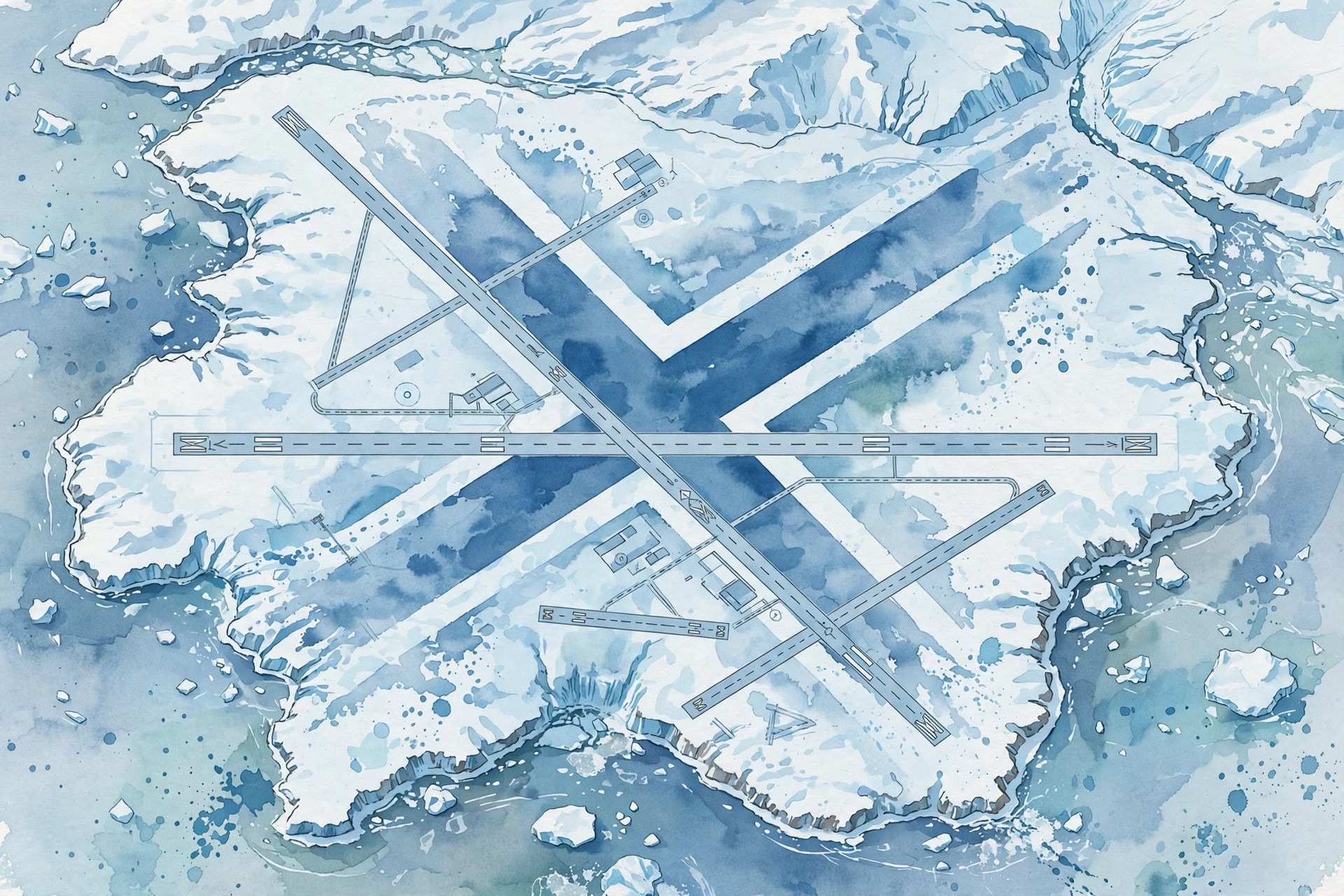
President Donald Trump shared an image on Truth Social on Saturday, October 31, depicting Greenland transformed into an enormous American military installation, the island’s entire surface covered with runways, aircraft hangars and rows of military jets, beneath a large American flag and the words “WELCOME TO GREENLAND.” The image, described in reporting as AI-generated, was posted without an accompanying policy announcement, explanation or statement of intent, and it drew swift criticism from Greenlandic commentators and other social media users who read it as a blunt statement of ambition toward a territory that is not American and whose leaders have repeatedly said it is not for sale.
The post matters because it is not an isolated joke. Trump has repeatedly expressed interest in bringing Greenland under American control, despite objections from leaders in Nuuk, Greenland’s capital, and Copenhagen, Denmark’s capital. Greenland is a semiautonomous territory within the Kingdom of Denmark, and its political leaders have consistently defended the island’s right to determine its own future. The United States already maintains a military presence there through Pituffik Space Base, and Washington has longstanding defence arrangements with Denmark and Greenland. The image collapses the distinction between that military cooperation and territorial control, and that collapse is exactly what its critics object to.
Trump Greenland Image and the Backlash From Greenland
The sharpest response came from Greenland itself. Political activist and former parliamentary candidate Orla Joelsen wrote that the image showed an enormous American aircraft carrier parked on top of Greenland, and asked whether it was the president’s latest fantasy of owning the country. Joelsen pointed to planned United States military facilities at Narsarsuaq and Mestersvig, along with upgrades to Pituffik Space Base, and insisted that those arrangements amount to military cooperation, not American ownership. He also reminded Trump that the United States and Denmark have signed agreements recognising Greenland’s right to self-determination and Danish sovereignty, and asked whether the president had forgotten what he signed or was hoping voters could not read it.
Other commentators joined in, in tones ranging from mockery to alarm. Independent journalist Aaron Rupar described the image as a depiction of Greenland as a giant American military colony. Other social media personalities mocked the post, with one quipping that Denmark was trying to have a diplomatic conversation while Trump was playing battleship with an entire country. Supporters of the president, by contrast, shared the image approvingly, presenting it as a statement of American strength in the Arctic and a way to keep Russian and Chinese influence away from the island. That split in reaction is itself part of the story: the same image reads as a provocation to one audience and as a promise to another, and the president’s decision to post it without explanation lets both readings circulate at once.
It is important to be precise about what has and has not been established. The reporting reviewed for this article quotes activists, journalists and social media commentators, not a formal statement from the Danish government or the Greenlandic government responding to this specific image. Readers should therefore not treat the backlash described here as an official diplomatic protest, even though it reflects a widely reported Greenlandic and Danish position that Greenland is not for sale and that its future is for Greenlanders to decide. If an official government response emerges, it will be a separate development from the social media reaction documented on October 31.
Trump Greenland Image and the September Security Agreement
The image also revives a dispute about what the United States and Denmark actually agreed in September. Trump has said that a new agreement with Danish and Greenlandic leaders gave Washington permanent control over security on the Arctic island at no cost to the United States, and he has at times described the arrangement in terms that suggest Denmark had given Greenland to the United States. Officials in Denmark and Greenland have appeared to understand the deal differently, as a security and defence cooperation arrangement that does not change sovereignty. At the G20 summit in Atlanta on Saturday, a reporter asked Secretary of State Marco Rubio whether Trump had misunderstood the agreement, noting that Trump had recently claimed Denmark had given Greenland to the United States while officials in Denmark and Greenland seemed to hold a different understanding.
That gap between descriptions is not a minor diplomatic detail. Greenland’s strategic importance is real: its location between North America and Europe, its proximity to Arctic shipping routes, and its mineral resources make it valuable to the United States, to Russia and to China, all of which have increased their Arctic activity. The United States has legitimate security interests in the region, and Denmark, as a NATO ally, has been a partner in meeting them. The question is whether those interests are pursued through cooperation with a sovereign partner or through a claim of control that partner rejects. The September agreement, as described by the administration, was presented as a breakthrough in cooperation. The October 31 image, as read by its critics, presents something closer to ownership, and the tension between those two presentations is what has kept the Greenland question alive through the autumn.
Danish Finance Minister Peter Hummelgaard, speaking at the opening of a new international airport in Ilulissat, said Trump’s threats to take control of Greenland had cast a shadow over the entire Kingdom of Denmark, but especially Greenland, while the airport itself marked hope and optimism. That remark, made before the October 31 image, captures the dual reality Greenlanders describe: daily life and development continue, including infrastructure that connects the island to the world, while a political argument about its future, conducted largely in American social media posts, hangs over it. The airport opening and the image post are unrelated events, but together they illustrate why Greenlanders experience the American debate as something that happens to them rather than with them.
Trump Greenland Image: Signal, Joke or Policy?
The hardest question about the image is also the simplest: what did the president mean by it? He did not say. That ambiguity is a recurring feature of Trump’s social media use, and it serves a political purpose. An image posted without text can be defended as a joke if it draws diplomatic criticism, celebrated as a promise if it draws support from his base, and treated as a trial balloon if it draws interest from allies. It can also be ignored by officials who do not wish to dignify it with a response, which is itself a form of response. For a news organisation, the responsible course is to report what was posted, who reacted and what the underlying facts are, without attributing to the president an intention he has not stated.
What can be stated with confidence is the underlying factual position. Greenland is not part of the United States. It is a self-governing territory within the Kingdom of Denmark, with its own government in Nuuk and a recognised right to self-determination. The United States has a military base there and is planning additional facilities in cooperation with Denmark and Greenland. Those facts do not change because an image shows the island covered in runways, and they are the facts against which any future American proposal will be judged by Nuuk and Copenhagen. If the administration wishes to change the legal status of Greenland, it would need to do so through negotiation with Denmark and Greenland, not through a social media post, and no such negotiation resulting in a transfer has been announced.
The timing of the post, three days before the midterm elections, is also part of its context. Trump has used the final weekend of the campaign to dominate attention with a series of posts and appearances, from restored rallies in Kansas and Iowa to the Greenland image, and the image ensures that the closing argument includes a statement of American strength abroad as well as domestic campaigning. Whether that helps or hurts Republican candidates is a political judgement, not a fact, and voters will render their own judgement on Tuesday. What is certain is that Greenlanders, Danes and America’s NATO allies will be watching what follows the image more closely than the image itself: whether it is followed by a proposal, a negotiation or silence will tell them more about American intentions than any picture can.
Sources
USN reviewed reporting from multiple outlets for this story. Read more from MEAWW, Opera News and True Blue Report.