

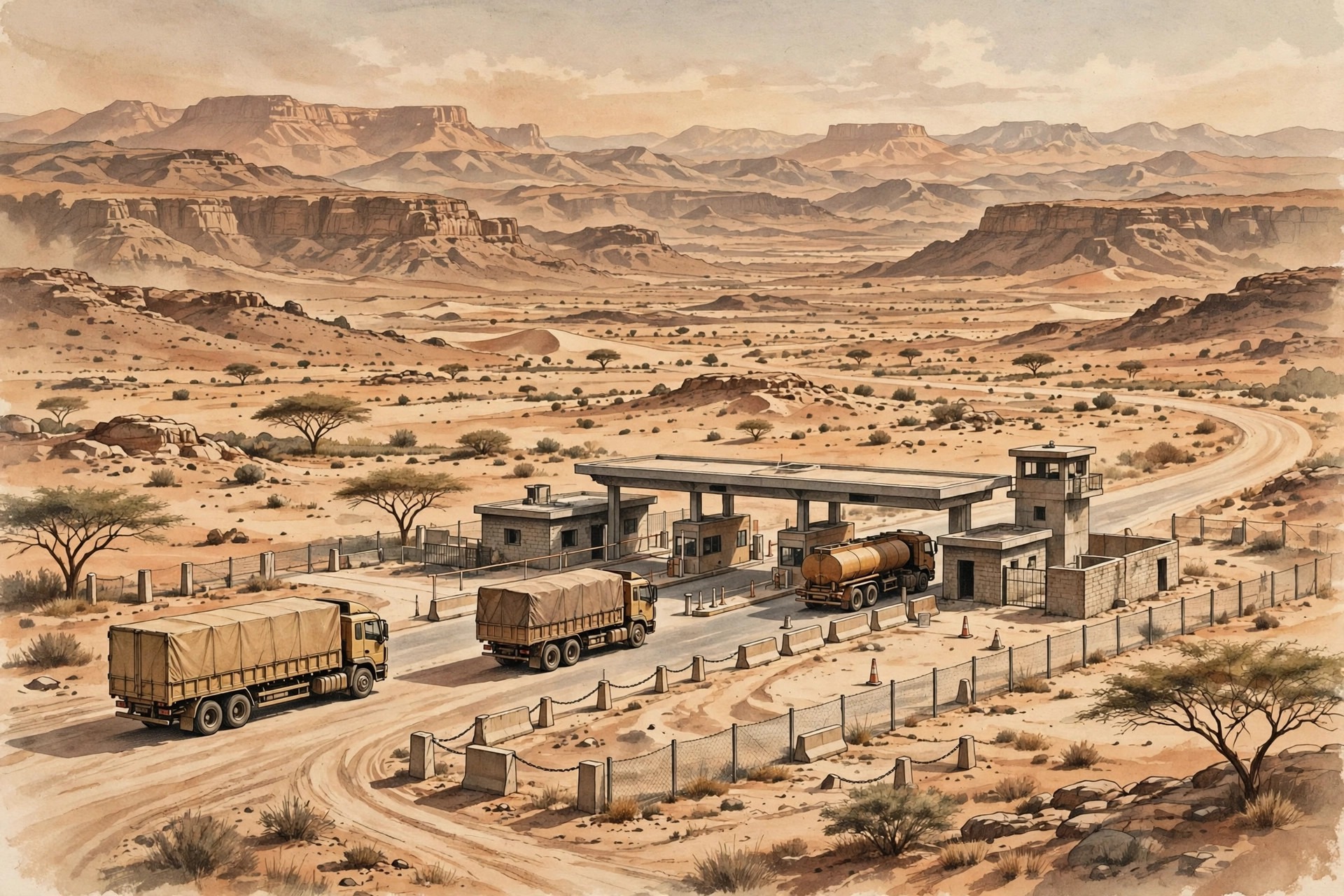
The United States Treasury has formally asked Iraq to close almost all of its border crossings with Iran, leaving only two open, according to Iraq’s foreign minister. The request, described by Fuad Hussein in an interview with Al Jazeera over the weekend of 7 and 8 November, is part of Washington’s widening campaign to squeeze Iran’s economy, a campaign that already includes a naval blockade in place since July and a new military task force aimed at the land routes Iran uses to move goods and oil. Baghdad has not agreed. Hussein made clear that closing the crossings would be difficult and would damage Iraq’s own economy, and he said discussions with Washington were continuing.
The disclosure adds a new front to the pressure on Tehran, one that runs through Iraq rather than across the sea. Iraq and Iran share a long, porous border with many crossing points, some official and some not, and the trade that flows across it matters to communities on both sides. For Washington, the crossings are a leak in the sanctions system. For Baghdad, they are a livelihood. That tension is at the centre of the negotiation Hussein described, and it is why the request, even if it is never fully accepted, is already shaping the conversation between the two governments.
What the US Treasury Asked Iraq to Do
According to Hussein, the US Treasury asked Iraq to shut down all of its border crossings with Iran except for two. One of the two exceptions is in the Kurdistan region of northern Iraq. The other was not named in the reporting of the interview. The request was presented as a formal one, and Hussein discussed it in the context of Washington’s broader effort to increase economic pressure on Tehran, an effort that has intensified sharply this year as the confrontation between the United States and Iran has deepened.
It is important to be clear about the source of this account. The request is known only through Hussein’s own description of it in the Al Jazeera interview. No statement from the US Treasury confirming the request appeared in any of the reporting, and Washington has not publicly described the demand in these terms. That does not mean the account is wrong, but it does mean it rests on a single source, and the details, including which crossings would stay open and what exactly Washington offered or threatened in return, have not been independently confirmed.
Why Baghdad Says Closing Every Crossing Is So Difficult
Hussein pushed back on the idea that Iraq could simply seal the border. He said there are many crossings, both official and unofficial, and that closing all of them would be difficult and would affect Iraq’s economy. That is not a diplomatic nicety. The Iraq-Iran border is one of the busiest land frontiers in the region, carrying pilgrims, traders, fuel, food and consumer goods, and the informal crossings are woven into the economies of border towns that have few other sources of income. A blanket closure would hit those communities first.
The minister’s response also reflects Iraq’s broader balancing act. Baghdad maintains close ties with Tehran and with Washington at the same time, and it has spent years trying to avoid being forced to choose between them. Closing the border with Iran at Washington’s request would be read in Tehran as a hostile act, while refusing outright would strain relations with the United States. Hussein’s answer, that discussions are continuing, keeps both relationships alive while committing Iraq to neither course. It is a holding position, and it may stay one for some time.
The Al-Sheeb Crossing Closure and the Smuggling Fight
Iraq has already taken one step in the direction Washington wants, though for its own stated reasons. On 21 October, Baghdad closed the busy Al-Sheeb crossing in Maysan province in the south of the country, saying it needed to review security there and install equipment to detect smuggling. Al-Sheeb is one of the major official crossings, and its closure was presented as a security and customs measure rather than as a response to American pressure.
That distinction matters, because smuggling is a real and separate problem on this border. Goods, fuel and currency move across it outside official channels, and Iran has long been accused of using Iraqi territory and Iraqi front companies to evade sanctions. Equipment to detect smuggling, and a review of security at a major crossing, are the kind of measures Iraq can present as its own sovereign decision rather than as obedience to Washington. Whether the Al-Sheeb closure becomes a model for other crossings, or remains a one-off, will be one of the things to watch as the talks continue.
Since this article was prepared, the picture at Al-Sheeb has changed again. On Tuesday 10 November, Iraq reopened the Al-Sheeb crossing after completing the technical requirements and security checks, according to the head of the Border Ports Authority, while the Mandali crossing was due to close temporarily from Friday for its own technical work. The reopening does not change the American request: the United States Treasury is still pressing Baghdad to close most of the crossings with Iran, and the two governments remain in discussions, according to Iraq’s foreign minister.
Oil Through Hormuz: The Understanding Hussein Described
The same interview contained a second significant disclosure. Hussein said Iraq had reached understandings with the United States that would allow Iraqi oil exports to pass through the Strait of Hormuz by way of a shipping lane near Oman. The terms of that understanding were not disclosed, and neither was the precise arrangement for the shipping lane. But the fact of it is important, because the Strait of Hormuz has become the central point of leverage in the confrontation with Iran, and Iraq’s ability to export its oil through it is a vital national interest.
The understanding, as Hussein described it, suggests that the negotiation is not one-sided. Washington is asking Iraq to tighten the border, and at the same time it appears to be offering assurances about Iraq’s oil exports, which are the lifeblood of the Iraqi state budget. That is the shape of a bargain, even if it is not yet a finished one. It also underlines how central the Strait has become: the same waterway Iran has threatened to close, and that the United States has said must be reopened, is now the subject of a separate arrangement between Washington and Baghdad. The details, when they emerge, will show how much Iraq has been promised and what, if anything, it has promised in return.
Attacks From Iraqi Soil and the Saudi Dialogue
Hussein used the interview to address another sensitive subject: attacks launched from Iraqi territory against Gulf states. He said Baghdad is investigating those attacks and wants dialogue with Saudi Arabia. That is a significant admission, because it acknowledges that armed groups operating from Iraqi soil have struck at Iraq’s neighbours, and it puts the Iraqi government on record as seeking to address the problem through diplomacy rather than denial.
On Iran itself, Hussein struck a careful balance. He said Iraq welcomes friendship with Tehran but rejects interference in its internal affairs. That sentence, in a single breath, captures the whole of Iraq’s Iran policy: close ties, but not submission. It is also a message aimed in two directions at once, reassuring Tehran that Baghdad is not joining a hostile camp, while telling Washington that Iraq will not simply do as it is told. The border-crossing request sits squarely in the middle of that balance, and the outcome of the talks will show how much weight it can bear.
The Blockade Backdrop: Pressure on Tehran
The border request does not stand alone. It is one element of a pressure campaign that has been building for months. The United States has maintained a naval blockade aimed at Iranian oil exports since July, and US Central Command has estimated, in a figure that has not been independently verified, that the blockade has already blocked more than 25 billion dollars’ worth of Iranian oil exports. On 7 November, Washington announced Task Force Iron Gate, a military effort aimed at the land and Caspian routes Iran uses to move goods around the blockade. The border crossings with Iraq are part of that same map.
None of this means the border will be sealed, or that Iraq will agree to what Washington has asked. The talks are continuing, and Baghdad has given itself room to negotiate. But the direction of American policy is clear: every route by which Iran moves goods, money and oil is being examined, and Iraq, as Iran’s largest neighbour and trading partner, is now being asked to play a central part in closing them. How far Iraq goes will depend on what it is offered, what it fears, and how much economic pain it is willing to accept at home. For now, the answer is that it is still talking, and that two crossings, one of them in Kurdistan, are the only ones Washington has said could stay open. Readers following the wider confrontation may recall the 20 million dollar reward the United States offered for information on Iran’s nuclear programme, and the quiet backchannel talks led by Vice President JD Vance that have been running alongside the public pressure.
Sources
USN reviewed reporting from multiple outlets for this story. Read more from Reuters, Arab News and The Jerusalem Post.