

Yemen Fighting Displaces 290,000: The UN Warning in Full
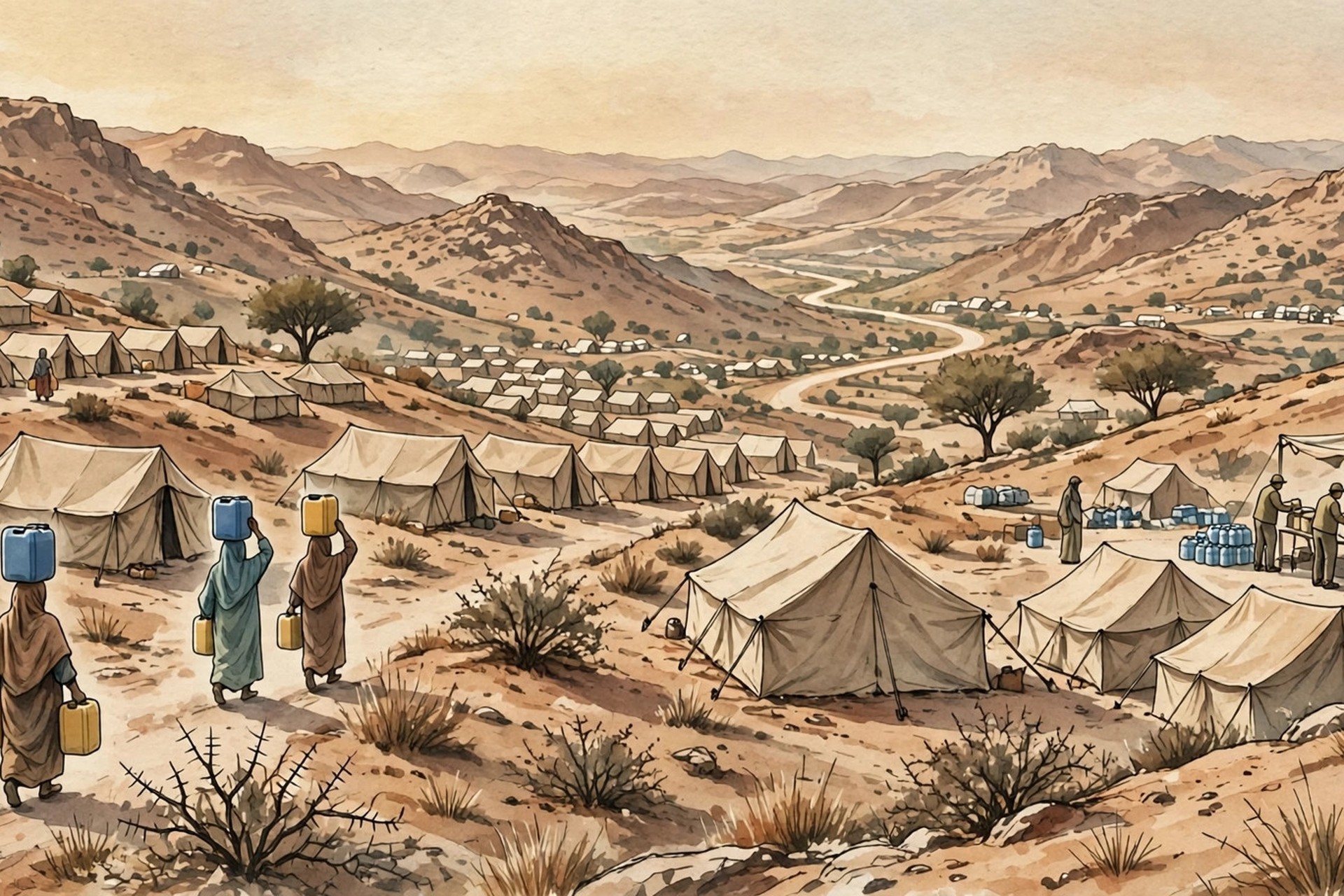
At least 290,000 people have been displaced in Yemen since fighting re-erupted in August 2026, according to the United Nations humanitarian office, OCHA. The figure was contained in an OCHA report published on Friday, October 30, 2026, and briefed by UN spokesperson Stephane Dujarric. It describes a rapid new wave of displacement in a country where millions were already displaced before August, and it places particular emphasis on the risks facing pregnant women among the newly displaced, hundreds of whom are due to give birth within days with little or no access to proper care.
Where the Fighting Intensified
According to OCHA, the fighting that drove the new displacement intensified particularly in Taiz governorate and in coastal areas. Taiz, in the south-west of Yemen, has long been one of the most contested areas of the war, with front lines running close to populated neighbourhoods and with civilians repeatedly caught between opposing forces. Coastal areas, meanwhile, matter both for the communities that live there and for access routes used by trade and aid. When fighting intensifies in such places, the civilian consequences tend to follow quickly, as families move away from shelling, street fighting and the breakdown of basic services.
For the people affected, displacement is rarely a single event with a clear destination. Families may move first to a nearby town or to relatives, then move again as fighting shifts or as resources run out. Some cross into neighbouring areas, and the UN account notes that thousands more have fled across the Red Sea to Djibouti, a journey that itself carries considerable risk. The OCHA total of at least 290,000 refers to people displaced within this renewed phase of fighting, and it should be read as a minimum figure from the UN’s reporting, not as a final or complete count of everyone affected.
Pregnant Women Among the Newly Displaced
Among the newly displaced, OCHA counted 6,100 pregnant women, including 600 who were due to give birth within two weeks of the report. That breakdown is the most alarming single detail in the UN’s warning, because it translates a large displacement total into an immediate, time-critical medical need. A woman due to give birth within two weeks cannot wait for a slow humanitarian response or for a health system to be rebuilt; she needs a safe place to deliver, a skilled attendant, and access to emergency care if complications arise, all within days.
Displacement makes each of those needs harder to meet. A pregnant woman who has fled her home may have left behind her medical records, her regular clinic and any birth plan she had made. She may be living in a tent or a crowded shelter without clean water, privacy or transport to a hospital. If she goes into labour at night, or if fighting blocks the road, the distance to the nearest functioning facility can become the difference between a safe delivery and a life-threatening emergency. The UN’s emphasis on the 600 women due within two weeks is therefore not a statistical footnote; it is a warning that hundreds of births are imminent under conditions where normal care has broken down.
Aid Reaches About Three in Four
Aid groups have reached about 249,000 of the newly displaced people, according to the UN account, which is roughly three in four of the 290,000 total. Those reached received food, hygiene supplies and emergency cash, the basic elements of a first response to displacement. The UN also sent mobile teams and midwives to displacement sites, a direct attempt to bring care to women who cannot easily reach a clinic, including pregnant women among the newly displaced. Mobile teams of this kind are a standard part of emergency health responses, but they are a substitute for a functioning health system, not a replacement for it.
A Crisis on Top of a Crisis
The new displacement has not occurred in an empty landscape. It sits on top of more than 5.2 million people who were already internally displaced in Yemen before August, according to the UN account. That pre-existing figure is itself one of the largest internal displacement totals in the world, reflecting more than a decade of war. When 290,000 more people are displaced into a country where millions are already displaced, they arrive in host communities and camps that are already overcrowded, and they compete for the same limited water, shelter, food and medical capacity.
The strain extends beyond Yemeni citizens who have been displaced internally. The UN account notes that 65,000 refugees and asylum seekers in Yemen face rapidly deteriorating conditions, with services disrupted and food and fuel prices rising. Yemen, despite its own war, has long hosted refugees and asylum seekers, many from the Horn of Africa, who arrived seeking safety and now find themselves caught in a second crisis. For that group, deteriorating conditions mean fewer services, higher costs and fewer options to move elsewhere, since onward movement is itself dangerous and often unaffordable.
Conflicting Counts of Civilian Deaths
Casualty figures for the renewed fighting vary depending on who counted them and how, and the differences are important to understand. The UN itself said it had verified 270 civilian casualties since August, including 68 killed, half of them children. That is a verified figure, meaning cases the UN was able to confirm through its own processes, and it is therefore likely to be a conservative count: verification takes time and access, and many casualties in active fighting cannot be verified quickly, if at all.
A different count comes from the Yemeni Network for Rights and Freedoms, whose field team in Taiz recorded at least 189 civilians killed between September 1 and October 29, including 38 children and 27 women. That figure is higher than the UN’s verified death toll, but it covers a different scope: it is a field count for Taiz alone, over a defined period, compiled by a Yemeni monitoring network on the ground. It is their count, not a UN-verified figure, and it should not be merged with the UN total as if the two were measuring the same thing. What it does suggest is that the civilian death toll in Taiz, as recorded by monitors working there, has been severe, with women and children forming a substantial share of those killed.
A third set of figures comes from the World Health Organization’s Health Cluster, as carried in secondary reporting. Those figures put conflict casualties at more than 5,100 between August 6 and early October, including 959 deaths, but they explicitly exclude areas where verification access is blocked. The Health Cluster figure is therefore broader than the UN’s verified civilian count, because it appears to cover conflict casualties more generally, and it comes with its own caveat about excluded areas. Taken together, the three counts do not contradict each other so much as they measure different things over different periods with different levels of access. Readers should treat the UN verified figure as a floor, the field count as a local monitor’s record, and the Health Cluster figure as a wider, access-limited estimate, each attributed to its source.
A Health System Running on a Fifth of Its Funding
The maternal health crisis described by OCHA is inseparable from a funding crisis. The UN Population Fund’s Yemen appeal for 2026 sought 71 million dollars, but only about 20 percent had been funded as of October, according to the figures in the reporting. That leaves a shortfall of roughly 57 million dollars, a gap that directly affects the services pregnant women and new mothers rely on: clinics, midwives, supplies, transport and emergency obstetric care. When only a fifth of an appeal is funded, programmes are cut, clinics close or reduce hours, and mobile teams cannot cover all the sites where they are needed.
The consequences are already visible in Taiz city, according to a UN Population Fund update dated October 16. That update said more than 147,600 women and girls of childbearing age in Taiz city had lost access to life-saving care. The figure is large because it covers not only pregnant women, but all women and girls who need reproductive and maternal health services, from antenatal care to safe delivery to postnatal support. Losing access to such care does not only affect individual patients; it removes the safety net that catches complications before they become fatal, for mothers and for newborns alike.
Escalation Beyond Yemen’s Borders and the UN’s Call
The renewed fighting in Yemen has not remained confined to Yemen’s internal front lines. According to the reporting, Houthi missiles were fired at Aden’s Maashiq presidential compound and airport on Friday, bringing the conflict to the seat of the internationally recognised government in the southern port city. On Saturday, the Saudi-led coalition said it had intercepted a hostile drone over the Riyadh region, indicating that the escalation was also reaching Saudi territory. These incidents form part of a wider regional escalation that has accompanied the renewed fighting since August, and they underline why the UN’s displacement figures cannot be read in isolation from the military dynamics driving them.
That wider escalation includes an earlier attack on October 10, when a Houthi attack on Riyadh’s King Khalid International Airport killed at least 13 people and wounded more than 300, according to the reporting. Al Jazeera described that attack as the most lethal attack on Saudi soil in more than a decade, a characterisation attributed here to Al Jazeera. The October 10 attack, the Friday missiles at Aden and the Saturday drone interception over Riyadh together show a conflict in which strikes are reaching government centres and civilian infrastructure, including an international airport, with lethal consequences beyond the immediate front lines in Taiz and coastal Yemen.
The background to this escalation stretches back more than a decade. The war began in September 2014, when Houthi forces seized the capital, Sanaa, and the Saudi-led coalition intervened in March 2015 in support of the internationally recognised government. More than eleven years later, the same broad confrontation continues, with phases of escalation producing fresh displacement, fresh casualties and fresh strain on a health system that was already among the most fragile in the world. That long history is why the UN’s latest figures, alarming as they are on their own, are described by humanitarian agencies as a new chapter in an existing crisis rather than as a crisis that began in August.
Against that background, the UN’s call, as paraphrased in the reporting, is for the protection of civilians and civilian infrastructure, for respect for international humanitarian law, and for safe, sustained and unimpeded humanitarian access. That call is directed at all parties, and it reflects the core humanitarian demand in any conflict: that civilians should not be targeted, that hospitals, schools and other civilian sites should be spared, and that aid workers should be able to reach people in need without obstruction. Whether that call is heeded will determine, in practical terms, whether the 290,000 newly displaced people, and above all the 600 pregnant women due to give birth within two weeks, receive the care and protection the UN says they urgently need.
Sources
USN reviewed reporting from multiple outlets for this story. Read more from Al Jazeera, Arab News Japan and EconoTimes.