

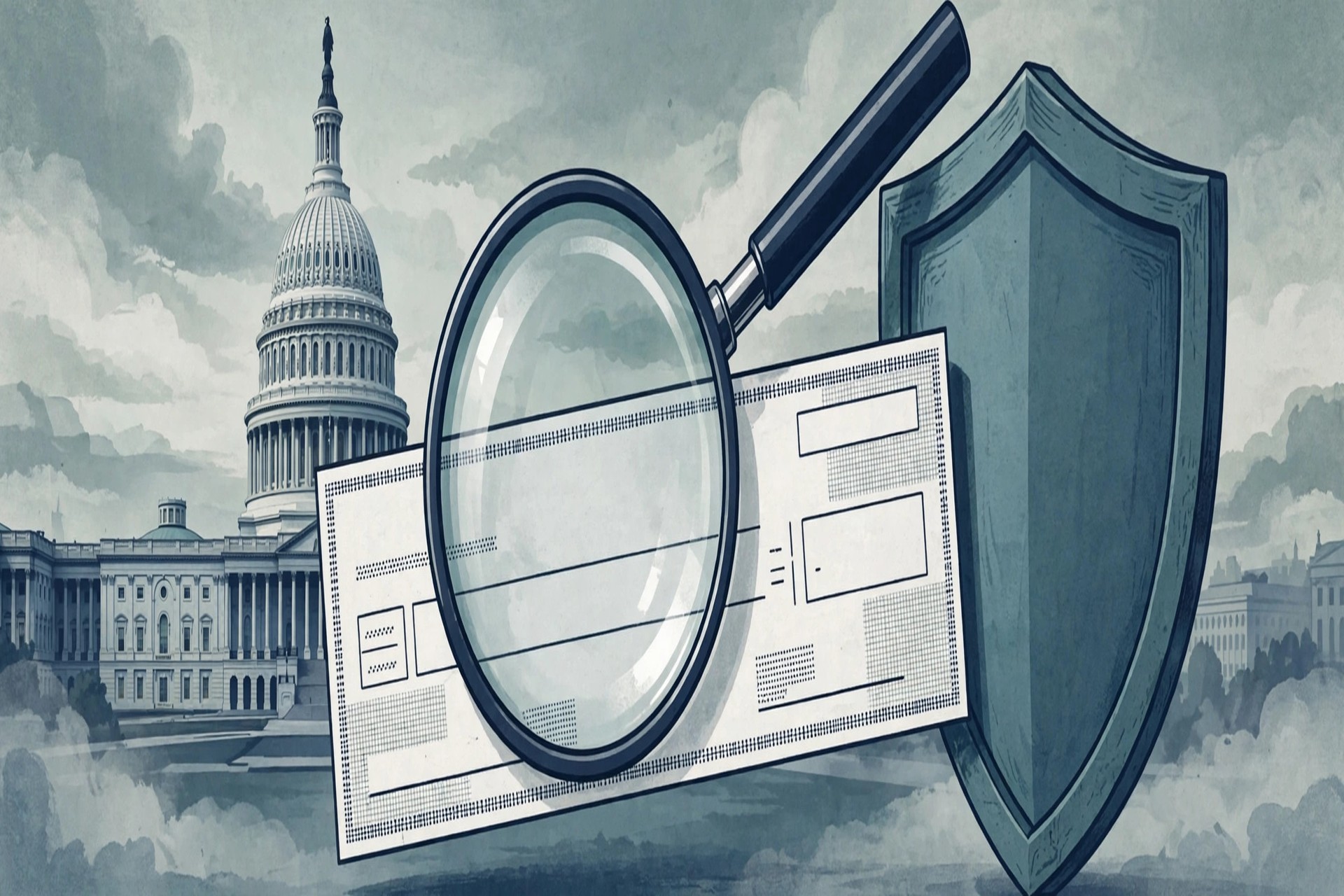
The House of Representatives has passed the Stopping Fraudulent Payments Act by a vote of 218-200, approving new safeguards aimed at preventing improper federal payments and strengthening the government’s ability to catch fraud before taxpayer money goes out the door. The bill, which now heads to the Senate, would require federal agencies to verify payment recipients against death records, incarceration data and other federal databases, and to recover funds sent in error more aggressively, in a bid to address a problem that costs taxpayers an estimated $186 billion a year.
The vote was largely along party lines, but not entirely. Republicans, who control the House, provided the bulk of the support, while most Democrats opposed the measure, arguing that it was overly broad, duplicative of existing efforts and potentially harmful to legitimate beneficiaries who could see payments delayed by new verification requirements. Supporters countered that the bill was a common-sense response to a staggering level of waste, and that the current system, in which agencies often pay first and investigate later, was no longer tenable.
At its core, the Stopping Fraudulent Payments Act is a data and accountability bill. It would mandate that agencies check the Social Security Administration’s Death Master File, the Treasury Department’s Do Not Pay system and other federal databases before disbursing funds, and that they report on improper payments in a more timely and transparent way. It would also expand the authority of agency inspectors general to investigate suspected fraud, and require agencies to develop plans to recover improper payments, including through offsetting future payments or referring cases for prosecution where warranted.
What the bill would do
The bill’s provisions are designed to close gaps that fraudsters and error-prone systems have exploited for years. One key requirement is pre-payment verification: before an agency sends money, it must confirm that the recipient is alive, not incarcerated where that would disqualify them, and not otherwise ineligible under programme rules. That may sound basic, but in practice, many agencies have relied on self-certification or on databases that are updated infrequently, allowing payments to continue to deceased individuals or to people using stolen identities for months or years.
Another provision focuses on data matching across agencies. Federal programmes are administered by dozens of departments, each with its own systems, and information about a person’s death, imprisonment or change in eligibility in one system does not always reach another. The bill would require agencies to share relevant data and to use the Treasury’s Do Not Pay portal, which consolidates multiple databases, as a standard check before payment. Supporters say this kind of cross-agency matching is the single most effective tool against improper payments, and that its wider use could save billions without cutting benefits for anyone who is genuinely eligible.
The bill also includes reporting and recovery measures. Agencies would have to publish more detailed information about improper payments, including the causes and the steps being taken to address them, and to set targets for reducing error rates. It would also strengthen the process for recovering funds that have already been paid improperly, by giving agencies clearer authority to offset future payments and to work with the Treasury to collect debts. Critics note that recovery is often difficult, particularly when money has been sent overseas or spent, but supporters argue that even partial recovery, combined with prevention, would represent a significant improvement.
The 218-200 vote and what it reveals
The 218-200 margin reflects both the partisan divide over how to address government waste and a degree of bipartisan agreement that improper payments are a serious problem. Almost all House Republicans voted in favour, joined by a handful of Democrats, while the majority of Democrats voted against, citing concerns about implementation and about the bill’s potential impact on vulnerable recipients. Democratic opponents argued that the bill, as written, could lead to delays or denials for people who depend on federal programmes, particularly if verification systems flag legitimate recipients in error, and that it did not provide sufficient funding for agencies to implement the new requirements properly.
Republican supporters, led by the bill’s sponsors, framed the vote as a test of fiscal responsibility. They pointed to the $186 billion figure, which comes from the Government Accountability Office’s annual estimate of improper payments across the federal government, and argued that no private business could survive losing that much money to error and fraud each year. They also noted that improper payments are not limited to one programme or party: they occur in Medicare, Medicaid, Social Security, pandemic relief programmes and many others, and they have persisted under both Republican and Democratic administrations.
The Senate prospects for the bill are uncertain. The Senate, where Democrats hold more leverage and where the 60-vote filibuster threshold applies to most legislation, has not yet taken up the measure, and it is unclear whether it would attract enough bipartisan support to advance. Some senators have expressed interest in improper payments reform, but others have raised similar concerns to House Democrats about implementation and about whether the bill’s mandates would be effective without additional resources. The House vote, however, puts pressure on the Senate to act, and gives supporters a concrete proposal to point to in the debate over government efficiency.
The $186 billion problem behind the bill
Improper payments are a longstanding and expensive problem for the federal government. The Government Accountability Office estimates that in the most recent fiscal year for which complete data are available, federal agencies made about $186 billion in improper payments, defined as payments that should not have been made, were made in the wrong amount, or lacked sufficient documentation to determine whether they were correct. That figure includes both overpayments and underpayments, though the vast majority are overpayments, and it spans programmes from health care to disaster relief.
The causes are varied. Some improper payments result from outright fraud, such as identity theft or false claims. Others result from administrative errors, such as incorrect calculations, outdated eligibility information or failure to verify a recipient’s status. Still others result from insufficient documentation, where an agency cannot prove a payment was correct even if it may have been. Pandemic-era programmes, which were rolled out quickly with limited verification to get money to people in need, contributed significantly to the total, but improper payments were a major problem long before the pandemic, and they have remained high even as emergency programmes have wound down.
Efforts to address the problem have had mixed results. The Do Not Pay system, created in 2010, was intended to help agencies avoid improper payments, but its use has been inconsistent, and some agencies have not integrated it fully into their payment processes. Inspectors general have repeatedly identified improper payments as a top management challenge, and the GAO has placed the issue on its High Risk List. The Stopping Fraudulent Payments Act is the latest attempt to move from recommendations to mandates, by requiring, rather than merely encouraging, the use of verification tools and by holding agencies more accountable for results.
What happens next
The bill now goes to the Senate, where its fate will depend on whether supporters can build a bipartisan coalition and whether Senate leaders decide to prioritise it amid a crowded legislative calendar that includes funding bills, defence authorisation and other measures. If the Senate passes the bill, with or without amendments, it would go to the president for signature. If the Senate amends it, the House would need to approve the changes before it could become law. Either way, the House vote marks a significant step for a proposal that has been debated in various forms for years, and it signals that improper payments reform remains a priority for House Republicans.
For taxpayers, the stakes are straightforward: $186 billion a year is money that could be spent on legitimate programmes, used to reduce the deficit, or returned to the public. Whether the Stopping Fraudulent Payments Act will achieve its goals depends on implementation, on whether agencies receive the resources and technical support they need to verify payments accurately, and on whether the new requirements strike the right balance between preventing fraud and ensuring that eligible people receive the benefits they are entitled to without undue delay. Those questions will now be at the centre of the Senate debate.
Related USN coverage: Another recent measure expanding executive authority over sanctions was covered in the USN report on the NDAA Section 8335 delegation (https://usnbreaking.com/trump-delegates-ndaa-section-8335-western-balkans-sanctions-powers-to-treasury-and-state/).
Sources
USN reviewed reporting from multiple outlets for this story. Read more from Congress.gov, GAO and AP News.