

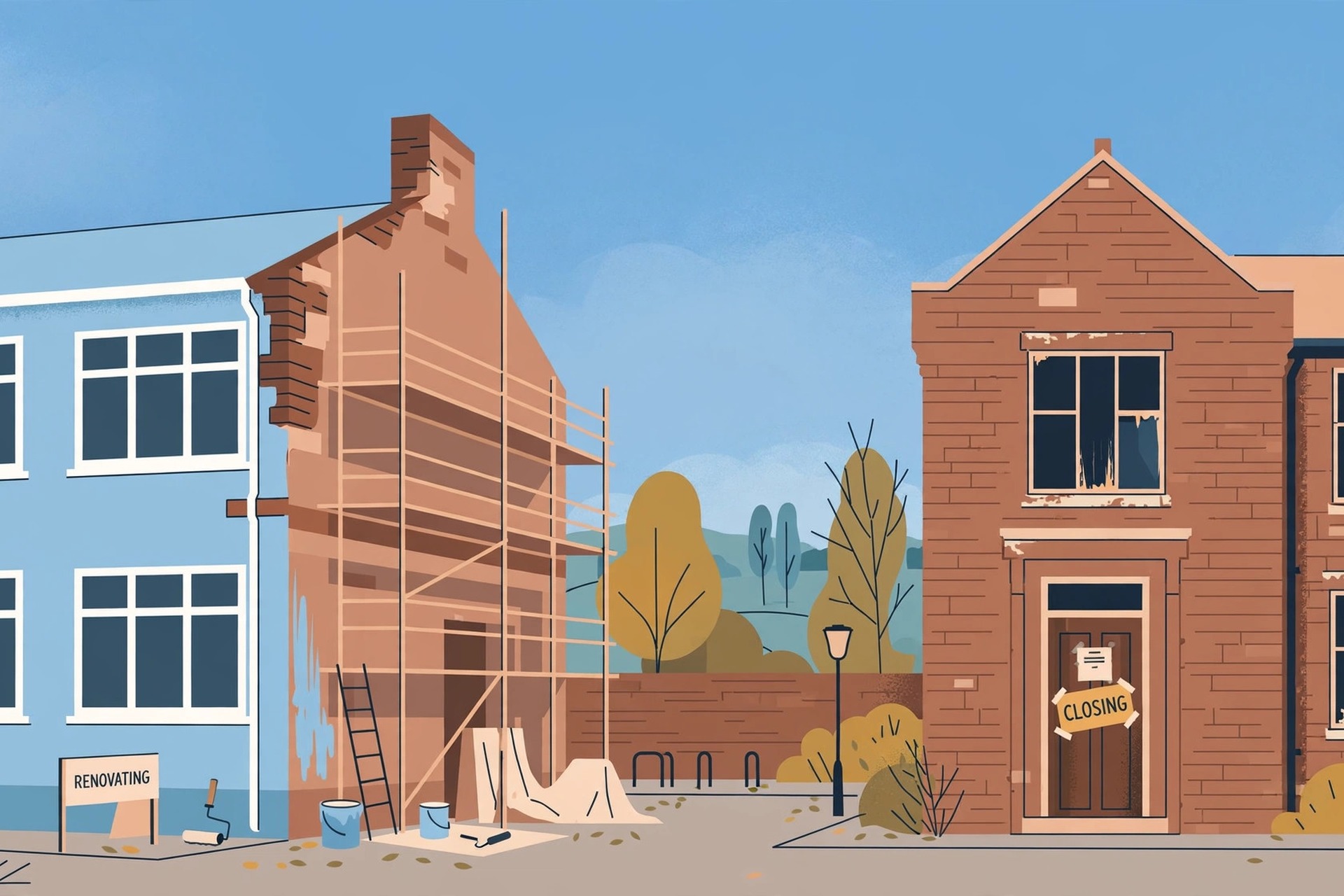
Philadelphia’s Board of Education voted on Thursday, October 29, 2026, to authorise up to $200 million in renovation spending for four public schools, taking the first concrete financial step under a sweeping facilities programme that will reshape the city’s school map over the next decade. The vote, carried by six votes to one, releases money for modernisation work at Bache-Martin Elementary, Catharine Elementary, Patterson Elementary and F.S. Edmonds, four campuses that district leaders say will become larger, stronger schools in a system that is simultaneously preparing to close seventeen others.
The decision matters because it turns a plan on paper into construction. In April 2026, the board adopted the School District of Philadelphia’s ten-year facilities master plan, known as “Accelerating Opportunity,” by a vote of six to three. That plan, valued at about $3 billion in total, set out a long-term vision for rebuilding, renovating and consolidating a school estate in which many buildings are old, many seats sit empty, and maintenance needs have piled up for years. Until now, however, the plan had not been matched with a specific, approved package of building projects. The October vote changes that, attaching real dollars, named schools and a delivery mechanism to the first tranche of work.
The four projects together account for $181 million of the $200 million authorisation, leaving headroom within the approved ceiling for related costs as the work develops. Bache-Martin Elementary in the Fairmount neighbourhood receives the largest share, at $68 million. Catharine Elementary in Southwest Philadelphia is allocated $48 million, and Patterson Elementary, also in Southwest Philadelphia, is allocated $53 million. F.S. Edmonds in East Mount Airy receives $12 million. District officials described the four campuses as anchors for their surrounding areas, schools that will not only be repaired but expanded and re-equipped for the students they are expected to serve in the years ahead.
According to the district, the renovations will add about 700 seats across the four schools and will affect roughly 2,400 students. The scope of work is broad rather than cosmetic. It includes new gymnasiums and cafeterias, additional and refurbished classrooms, upgraded heating, ventilation and air-conditioning systems, new roofs and windows, improved restrooms, and accessibility improvements so that students, staff and visitors with disabilities can use the buildings fully. For schools that have waited years for major investment, the list reads as an attempt to address several problems at once: buildings that are hard to heat and cool, spaces that no longer fit the way teaching happens, and facilities that fall short of modern accessibility standards.
Philadelphia school board’s $200 million renovation vote and what the four projects will build
The board did not hand the projects directly to a single builder. Instead, it awarded a contract to the Philadelphia Authority for Industrial Development, which will oversee the process of issuing requests for proposals, selecting developers and negotiating agreements for the work. That arrangement places a public-purpose authority between the district and the construction market, with the task of running competitive processes and managing the agreements that follow. Administrative fees paid to the authority are capped at one per cent of payments made to construction firms, up to a total of $2 million, a limit designed to keep overhead within bounds while the bulk of the money goes into bricks, roofs, classrooms and equipment.
The choice of these four schools is inseparable from the other half of the district’s plan: closures. Each renovated school is expected to absorb students from campuses that are slated to close, so that modernisation and consolidation move together rather than as separate, unrelated decisions. Bache-Martin, for example, is set to take in students from Robert Morris Elementary and Waring Elementary, two schools on the closure list. The logic, as district leaders have presented it, is that a smaller number of better-equipped schools can serve students more effectively than a larger number of half-empty, deteriorating ones, provided the receiving schools are genuinely ready when the moves happen.
That readiness question is at the heart of the debate in Philadelphia. Parents whose children attend a school marked for closure want to know where their children will go, how far they will travel, and whether the new school will be finished, staffed and welcoming when they arrive. Parents at receiving schools want to know that an influx of new pupils will not crowd classrooms or strain services that are only now being improved. The board’s vote does not answer every one of those questions, but it does put the receiving schools first in the spending queue, which is the sequence the district says the plan requires: build up the schools that will remain before closing the schools that will not.
The 17 schools slated to close and the timeline families face
Seventeen schools are slated to close after the 2026-27 school year, meaning no school on the list closes before the start of the 2027-28 school year. The list spans the city and every level of schooling. The elementary schools named are Blankenburg, Fitler, Morris, Overbrook, Pennypacker, Welsh and Waring. The middle schools named are AMY Northwest, Harding, Stetson, Tilden and Wagner. The high schools named are Lankenau, Parkway Northwest, Parkway West, Penn Treaty and Robeson. Together, those seventeen closures represent one of the largest single rounds of school consolidation Philadelphia has undertaken, and each name on the list corresponds to a neighbourhood, a staff and a community of families who must now plan for a move.
The timeline gives families and the district roughly a school year and a half of lead time, at least in formal terms, but the practical work of transition will begin much sooner. Enrolment decisions, transport routes, staffing assignments and building preparations cannot wait until the final term of the closing schools. Community meetings, school-choice processes and individual family conversations will need to fill the months between now and the closures, and the district’s credibility will be tested less by the vote itself than by how clearly and early it communicates each next step. A closure announced in a boardroom feels very different from a closure experienced as a series of letters, meetings and bus-route changes, and it is the second experience that families will remember.
District leaders argue that the scale of the change reflects the scale of the problem. Enrolment has been declining, leaving many buildings with large numbers of empty seats, and the average school building in the district is about seventy-five years old. The district estimates its total unmet facilities needs at about $8 billion, including about $4.5 billion in deferred maintenance alone — repairs and replacements that have been postponed and now cannot be postponed indefinitely. On that account, doing nothing is not a neutral option: it would mean continuing to spend money heating, patching and staffing buildings that are increasingly expensive to run and increasingly unsuited to modern teaching.
Why one board member voted no and what opponents are asking for
The sole dissenting vote on October 29 came from board member Whitney Jones, who had also voted against the master plan in April. Her objection centres on money that has not yet been secured. Reports of the debate put the unfunded portion of the wider plan at roughly $1.9 billion to $2 billion in state and philanthropic funding that the district hopes to obtain but does not yet have in hand. For Jones, approving major spending before that funding is certain risks committing the district to a programme it cannot finish, or forcing future cuts elsewhere to pay for buildings already started. Supporters of the plan counter that waiting for every dollar to arrive before starting any project would leave students in deteriorating buildings for years longer, and that the first projects must begin if the wider funding case is to be credible.
Opposition was visible outside the boardroom as well as inside it. On October 29, elected officials, union leaders and students rallied against the closures, arguing that closing neighbourhood schools harms communities, disrupts children’s education and removes anchors from areas that already face disinvestment. City Council members urged Mayor Cherelle Parker to intervene in the process, a call that reflects the unusual governance of Philadelphia’s schools: the board is appointed by the mayor and confirmed by City Council, rather than elected directly by voters, so the mayor’s position carries particular weight even though day-to-day decisions rest with the board and the district.
That governance question has now taken a formal turn of its own. Councilmember Isaiah Thomas separately introduced a resolution calling for hearings on whether the board should become a fully elected body, or a hybrid body with both elected and appointed members. No hearing date has been set, and no discussion with the mayor on the proposal has been reported, so the resolution is best understood as the opening of a debate rather than a decision. Still, it signals that the closures fight is expanding beyond individual schools into a broader argument about who should make decisions of this magnitude for Philadelphia’s children, and how directly voters should be able to hold those decision-makers to account.
What happens next will be measured in construction milestones, funding announcements and family transitions, in that order. The Philadelphia Authority for Industrial Development must now run the procurement processes for the four renovation projects, turning the board’s authorisation into contracts, designs and building sites. The district must pursue the state and philanthropic funding that would close the gap between the $3 billion ambition and the money currently available. And, most importantly for the families directly affected, the district must show that receiving schools such as Bache-Martin, Catharine, Patterson and F.S. Edmonds are ready — in seats, in staffing and in welcome — before the seventeen closing schools shut their doors after the 2026-27 school year. Related USN coverage: Foley Alabama city council e-bike rules and flood ordinance. Related USN coverage: Orange Beach council November 3 vote on aquatics centre oversight.
For Philadelphia, the October vote is therefore both a beginning and a test. It begins the physical transformation promised by “Accelerating Opportunity,” with real money for four schools and a delivery route for the work. It tests whether a district facing declining enrolment, ageing buildings and a multi-billion-dollar maintenance backlog can modernise and consolidate at the same time without losing the trust of the communities whose schools are closing. The renovated classrooms, gyms and cafeterias will be visible proof of progress if they arrive on time. The experience of the families moving from the seventeen closing schools will be the measure by which the plan is ultimately judged.
Sources
USN reviewed reporting from multiple outlets for this story. Read more from Formative Spaces, Chalkbeat Philadelphia and FOX 29 Philadelphia.