

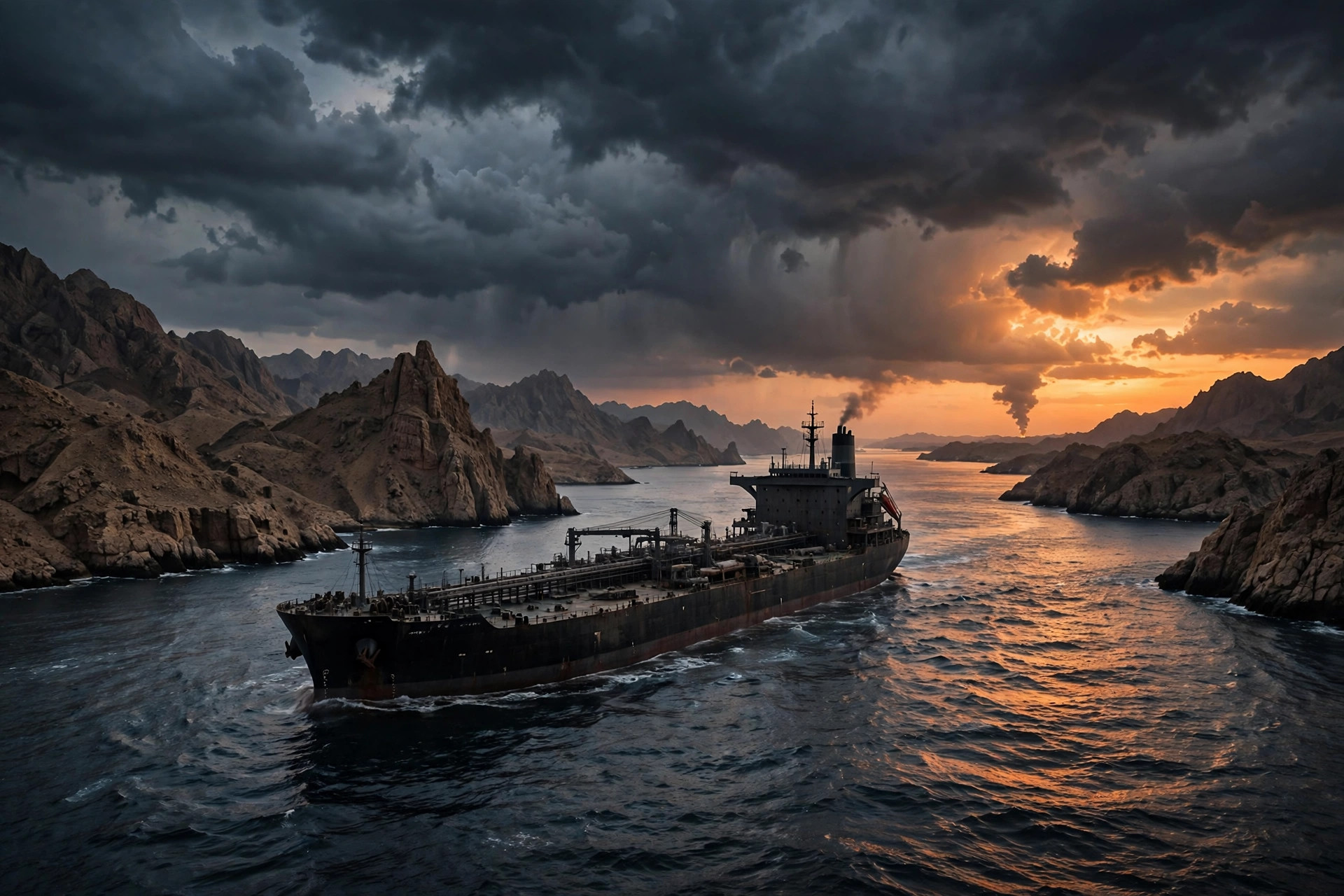
President Donald Trump said on Thursday that the United States does not need a deal with Iran, reversing the diplomatic track his own administration had been pursuing and sending oil prices sharply higher within hours. In a post on Truth Social, Trump wrote that the days of needing an agreement with Tehran were over, claimed Washington already held Iranian money and controlled the Strait of Hormuz, and told Vice President JD Vance to turn his attention away from the Iran file and toward fraud investigations in Democratic-run cities. The message landed in the middle of a violent week in the Gulf, with four tankers reported hit in the Strait of Hormuz and Iran insisting it will not reopen the waterway until Washington meets its seven conditions for talks.
The post was the sharpest turn yet in a war that has now run for more than eight months, and it left the central question about the conflict unanswered: if there is to be no deal, and no new major strikes either, what exactly comes next. The administration’s own secretary of state had said only two days earlier that the economic campaign against Iran was working so well that major combat was unnecessary. Trump has now said the same thing in blunter terms, while keeping the blockade and the sanctions in place and warning that he would strike again if he judged the situation to be moving against the United States. For the markets, for the shipping companies using the strait, and for the two sides themselves, the result is a war that is neither ending nor escalating, but grinding on under a blockade that neither side is willing to lift first.
What Trump Posted on Thursday
The post, published on Truth Social on Thursday, November 12, was short and absolute. “We don’t need a deal with Iran,” Trump wrote. “Those days have long since passed. We’ve got their money, Hundreds of Billions of Dollars, and we’ve got their Strait!” The White House press office, asked about the message, responded by email to highlight that Trump had made clear he sees no need to negotiate with Iran, without directly addressing the reported possibility of renewed talks.
The timing mattered as much as the words. Only earlier in the week, Trump had said he believed the war “militarily is effectively over” and that new strikes on Iran were highly unlikely if talks kept progressing. His administration had authorised Vance to pursue a new ceasefire and a resumption of nuclear negotiations, and Vance had spent the previous two weeks in indirect talks with Iranian officials. The Wall Street Journal reported on Wednesday evening that Vance was even weighing a face-to-face meeting with Mohsen Rezaei, the secretary of Iran’s Supreme National Security Council. Trump’s post appeared to close that door in public, and to do so while the talks were still, as far as anyone outside the administration knew, alive.
Trump underlined the shift in an interview with the conservative host Hugh Hewitt the same day, saying he would not hesitate to renew strikes on Iran if he saw things going “the other way”, while also insisting that the United States “totally” controls the Strait of Hormuz. In the same interview, he said he would consider it a defeat if the regime in Iran remained in power by the end of his term. The two messages together, no deal and no hesitation about striking, describe a policy of pressure without negotiation: the blockade stays, the sanctions stay, and the threat of force stays, while the diplomacy that might have lifted any of them is set aside.
Why Trump Says No Iran Deal Is Needed
The argument Trump is making, in the post and through his administration, is that the United States no longer needs anything from Iran because it already has what it wants. The money is frozen Iranian assets held under sanctions, which Trump put at hundreds of billions of dollars. The strait is the Strait of Hormuz, the narrow waterway between Iran and Oman through which a large share of the world’s seaborne oil passes, and which the United States has been patrolling and escorting tankers through since the war began. If Washington holds the money and controls the waterway, the reasoning goes, there is nothing left to negotiate over, and certainly nothing worth paying for with concessions.
That reasoning has a political dimension as well as a strategic one. Vance, who served as the lead negotiator for a short-lived truce earlier in the conflict, has been blunt in blaming the war and the economic reverberations it caused for the Republicans’ sweeping losses in the midterm elections. The party lost control of Congress, and the war’s cost at the petrol pump and in the markets was one of the issues Democrats campaigned on. Redirecting Vance to fraud investigations in Democratic-run cities, as Trump has now ordered, takes the vice president off a file that has become a political liability and puts him on one the White House believes plays better with its supporters. The move is as much about the aftermath of the midterms as it is about Iran.
There is also a simpler reading, which is that Trump believes the pressure is working and sees no reason to trade it away. Secretary of State Marco Rubio made exactly that case in Paris on Tuesday, telling reporters after two days of meetings with foreign ministers from the Group of Seven that the American economic campaign against Iran was “so devastating” that there was no need for major combat operations for now. Rubio said Washington intended to maintain its current approach rather than resume the war or accept an unfavourable agreement, and he told the G7 ministers in a closed-door session that the United States had a third option beyond war and a bad deal: continuing its existing policy. Trump’s post is that third option, stated as a slogan.
Vance Pulled From the Iran File
The most concrete instruction in Trump’s post was aimed at his own vice president. Trump told Vance to focus his “complete and total attention” on the administration’s anti-fraud campaign in Democratic-controlled cities and states, rather than on pursuing a peace agreement with Iran. It was a public redirection of the man who had become the face of the administration’s effort to end the fighting, and who had headed up negotiations over the summer after advocating restraint in American military interventions overseas for years.
Vance’s role had grown steadily through the autumn. He had taken part in indirect talks with Iran during the previous two weeks, seeking a new ceasefire and the resumption of nuclear negotiations, according to reporting at the time. He had also become the administration’s most prominent internal critic of the war’s political costs, arguing openly that it had hurt the party at the polls. That candour may have contributed to the decision: a negotiator who believes the war is a liability is a difficult messenger for a policy of indefinite pressure, and Trump has now given him a different assignment altogether.
Whether the redirection is permanent is unclear. The White House has not said Vance is barred from the Iran file, only that his attention should be elsewhere, and administrations have reversed such instructions before. But the signal to Tehran is unmistakable. Iran’s negotiators had been dealing with Vance’s channel, and that channel has now been publicly downgraded. Tehran’s response, delivered through its parliament speaker, was to say that the ball is now in Washington’s court, and to restate the conditions on which it will talk at all. USN has also covered the earlier turn in this story, when Trump said new Iran strikes were highly unlikely if talks progressed — a position Thursday’s post has now overtaken.
Four Tankers Hit in the Strait of Hormuz
While the diplomacy stalled, the attacks on shipping continued. Iran’s military said four oil tankers were hit by explosions in the Strait of Hormuz on Wednesday and Thursday, after the vessels ignored warnings and used a route Tehran calls unauthorised. Iran’s Revolutionary Guards Navy said two supertankers were disabled by explosions on Wednesday night after they ignored warnings against using what Tehran calls a prohibited path through the strait, and were left burning with a combined cargo of more than four million barrels of oil. Iran’s army later said two more tankers had struck mines on Thursday afternoon while sailing through the eastern strait after ignoring warnings and disabling their radar systems.
The Iranian account could not be independently verified, and the details that could be checked told a more complicated story. Britain’s United Kingdom Maritime Trade Operations agency, which monitors maritime safety, said one vessel was hit by an unidentified projectile about 14 nautical miles northwest of Ras al-Khaimah in the United Arab Emirates on Wednesday while leaving the strait. One vessel that could be identified was the Dominica Prosperity, run by South Korea’s Sinokor, which was hit on November 11 and from which all 22 crew members were evacuated. The Joint Maritime Information Center’s update for November 12 listed four tanker incidents in the Strait of Hormuz and the Arabian Gulf between November 10 and 12, including attacks northeast of Lima in Oman and north of Khasab, as well as two incidents in the Arabian Gulf.
The pattern is not new, but its pace has quickened. Attacks on vessels intensified in the past month, with 37 attacks on ships in and near the Strait of Hormuz in October alone, the highest monthly tally since the war began on February 28, according to Washington Institute for Near East Policy data cited by Reuters. At least 10 more ships were hit in the first 10 days of November. The International Maritime Organization has verified more than 130 attacks on vessels in the strait since the war began. Oil shipments coming out of the strait have recovered to near prewar levels after Iran effectively choked the critical waterway for months, but international tankers are now relying on United States Navy escorts to get the oil out, and every new attack pushes insurance and shipping costs higher.
Friday brought two more Iranian claims. The Revolutionary Guards said their aerospace forces had destroyed an American early-warning radar installation in Bahrain, in retaliation for an attack on a telecommunications tower in the southern Iranian town of Sirik late on Thursday. The claim, carried by Iranian state media, could not be independently verified, and there was no immediate comment from the United States military or from Bahrain. The Guards’ navy also said a tanker carrying liquefied gas had struck a naval mine and exploded in the eastern part of the strait while using a route Iran calls unauthorised and dangerous. Accounts differed on the cargo: Reuters described the ship as carrying liquefied natural gas, while the Associated Press, citing the Iranian news agency IRNA, described it as a liquefied petroleum gas carrier. The Guards named no ship, gave no flag, and said nothing about the crew.
Iran’s Seven Conditions, and Rubio’s Answer
At the centre of the standoff is a list of seven conditions that Iran says Washington must meet before the Strait of Hormuz can reopen and negotiations can resume. Mohammad Bagher Ghalibaf, Iran’s parliament speaker and its top negotiator, set them out in an interview with Al Jazeera on Wednesday, saying the ball was now in the Americans’ court and that the strait “will not return to what it was before the war”. Iran has never published all seven conditions as a single list, but Iranian officials have named them repeatedly: an end to the war on all fronts, including Lebanon; the release of frozen Iranian assets; a waiver of oil sanctions; an end to the American naval blockade of Iranian ports; compensation for war damage and environmental damage caused by the strikes; a reduction in the American military presence in the Middle East; and a formal declaration that the war is over.
Tehran says it has already sent Washington its response outlining these demands through Qatari mediators, and is still waiting for an official reply. Foreign Minister Abbas Araghchi set out the plan in New York on September 24, and on November 8 he wrote that Iran’s two-day proposal stood: meet the requirements, including an end to the war on all fronts, and the region would see results within two days. Ghalibaf added that Tehran would decide the format and agenda of any talks only after the conditions were fulfilled and accepted, and that it had reached an understanding with Oman on shipping routes and a maritime traffic separation system.
Washington’s answer has been a flat rejection. Rubio has described the conditions as “absurd” and “not serious”, and on Sunday he said the Iranian demands were “simply not just unacceptable, but in some cases outrageous and ridiculous and really not realistic”. He added that Iran was demanding “pallets of cash, which the President’s made clear is not going to happen”. Araghchi answered him on X on Wednesday, calling Rubio’s sanctions argument “drivel” and saying that “delusions” were producing failed American policy. Mohsen Rezaei, the secretary of Iran’s Supreme National Security Council, said the same day that no negotiations with the United States were under way at all, calling talk of talks or a meeting in Qatar “complete lies”. The two sides are not even agreed on whether they are talking, let alone on what a deal would contain.
What the Oil Market Did
The market’s verdict on Trump’s post was immediate. Brent crude, the international benchmark, settled at 95.82 dollars a barrel on Thursday, up 3.06 dollars or 3.3 per cent, while West Texas Intermediate crude closed at 88.74 dollars, up 2.21 dollars or 2.6 per cent. Brent had briefly traded near 96 dollars during the session, after slipping below 90 dollars on Wednesday, and European natural gas surged 6.7 per cent on the same day. The rally came despite a bearish weekly report from the Energy Information Administration, which showed American crude inventories unexpectedly rising by 4.66 million barrels against expectations of a draw.
The jump looks dramatic, but it needs context. Oil prices have crashed about 20 per cent from the late-October peak of 118 dollars a barrel, weighed down by hopes of a sustainable de-escalation in the Middle East and in the Russia-Ukraine war, and even after Thursday’s rise Brent was still heading for a roughly 2.4 per cent weekly loss, its second straight weekly decline. The market is caught between two forces: the fear that the war will disrupt supply through the strait, and the evidence that, for now, oil is still flowing. Flows through the strait have rebounded in recent weeks to nearly prewar levels, and the Energy Information Administration has forecast American production of 14.3 million barrels a day in 2027, up from 13.9 million this year. What Thursday showed is how quickly that balance can tip when the president speaks.
The wider costs are also visible. Yemen’s Iran-aligned Houthis said they had attacked a pumping station on the Saudi East-West oil pipeline, an oil facility in the Red Sea city of Yanbu, and an Aramco building in Riyadh, adding another source of upward pressure on prices. Shipping a barrel of crude from the Middle East Gulf to Asia on a large tanker cost more than 37 dollars by mid-October, more than five times the prewar level, according to the International Energy Agency, as producers tied up a large portion of the global tanker fleet on inefficient shuttle movements in and out of the strait. American consumers have felt the same pressures at home, which is one reason the administration has been looking for ways to lower diesel and petrol prices, including extending a waiver that allows some foreign-flagged ships to transport oil between American ports.
The War So Far: Eight Months In
The conflict began on February 28, 2026, when the United States and Israel launched Operation Epic Fury against Iranian nuclear and military facilities. A ceasefire took effect on April 8 and collapsed in early July, and the American naval blockade of Iranian ports, first imposed on April 13, was lifted in June and reimposed on July 14. It remains in force, and no deal has been reached. The war is now in its ninth month, and the pattern of the last few weeks, low-intensity attacks on shipping, Houthi strikes on Saudi infrastructure, and a blockade that neither side will lift first, looks increasingly like the settled shape of the conflict rather than a pause before its end.
The pressure campaign has also reached into areas beyond the battlefield. Iran told the United Nations’ International Atomic Energy Agency this month that discussions on nuclear monitoring cannot proceed while Iran is under threat from military attacks, according to a confidential report sent to member states and obtained by the Associated Press. That puts the nuclear question, which was the original reason for the February strikes, further out of reach even as the fighting continues. The United States, for its part, has been pressing Iraq to close most of its border crossings with Iran as the Treasury Department tightens the economic pressure on Tehran, a campaign USN has covered separately in the American demand for Iraq to close most of its Iran border crossings.
None of this means the war is over, whatever the president said earlier in the week. The attacks on tankers, the Houthi strikes, the radar claim in Bahrain and the stalled nuclear monitoring all point in the same direction: a conflict that has settled into a lower gear but has not stopped, and in which both sides believe time is on their side. Trump believes the blockade will eventually force Iran to negotiate on American terms. Iran believes the blockade will eventually become too expensive for Washington to sustain. Thursday’s post was Trump’s way of saying he is prepared to wait.
What Comes Next
The immediate question is whether anyone picks up the negotiation that Trump has just publicly set aside. Qatar, which has acted as the main go-between for Washington and Tehran through most of the conflict, has not commented publicly on the post, and there is no sign of a new round of talks being scheduled. The International Energy Agency publishes its monthly oil-market report on Friday, and traders will be watching it for any sign of how far the tanker attacks have cut into supply. The next test in the strait will come with the next ship that tries to pass through it, and the next test of Trump’s policy will come with the next attack.
For the administration, the risk is that “no deal” becomes a policy with no exit. The blockade and the sanctions are squeezing Iran’s economy, as Rubio said in Paris, but they are also squeezing American consumers and American allies who depend on Gulf oil, and they have not produced the collapse or the capitulation that would make a deal unnecessary. For Iran, the risk is the mirror image: the seven conditions are a high price for reopening the strait, and every week they go unmet is another week in which the blockade tightens and the attacks on shipping invite the American response Trump has promised. Both sides have now said, in their own ways, that they can wait. The oil market, the shipping companies and the people living with the consequences of the war will find out how long that waiting lasts.
Sources
USN reviewed reporting from multiple outlets for this story. Read more from Oilprice, The National and Outlook India.